In this area
Ain Diab / La Corniche
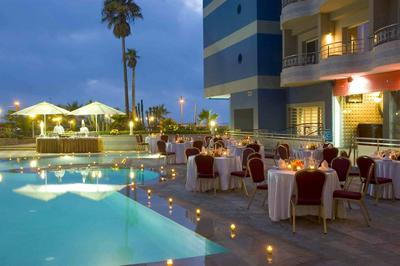
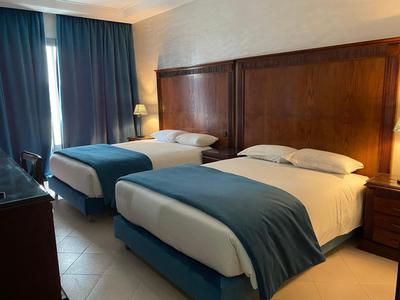
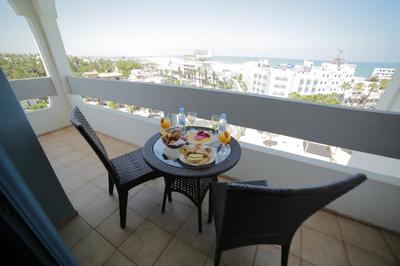
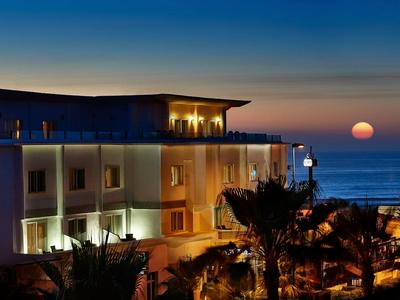
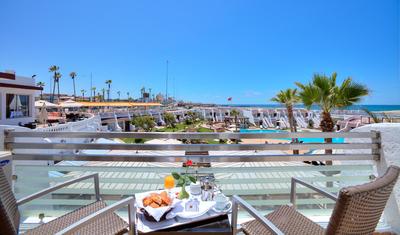
Casablanca Le Lido Thalasso & Spa (ex Riad Salam)
6.3· 1,476 reviews
approx. from£86 / nightSee prices
The Casablanca issue
On Casablanca’s Atlantic edge, Ain Diab / La Corniche shifts from beach-club daylight to the city’s loudest after-dark strip, with seafood, sea views and a salty wind that changes the mood of the whole metropolis.
By Leila TaziCasablanca, quartier by quartier
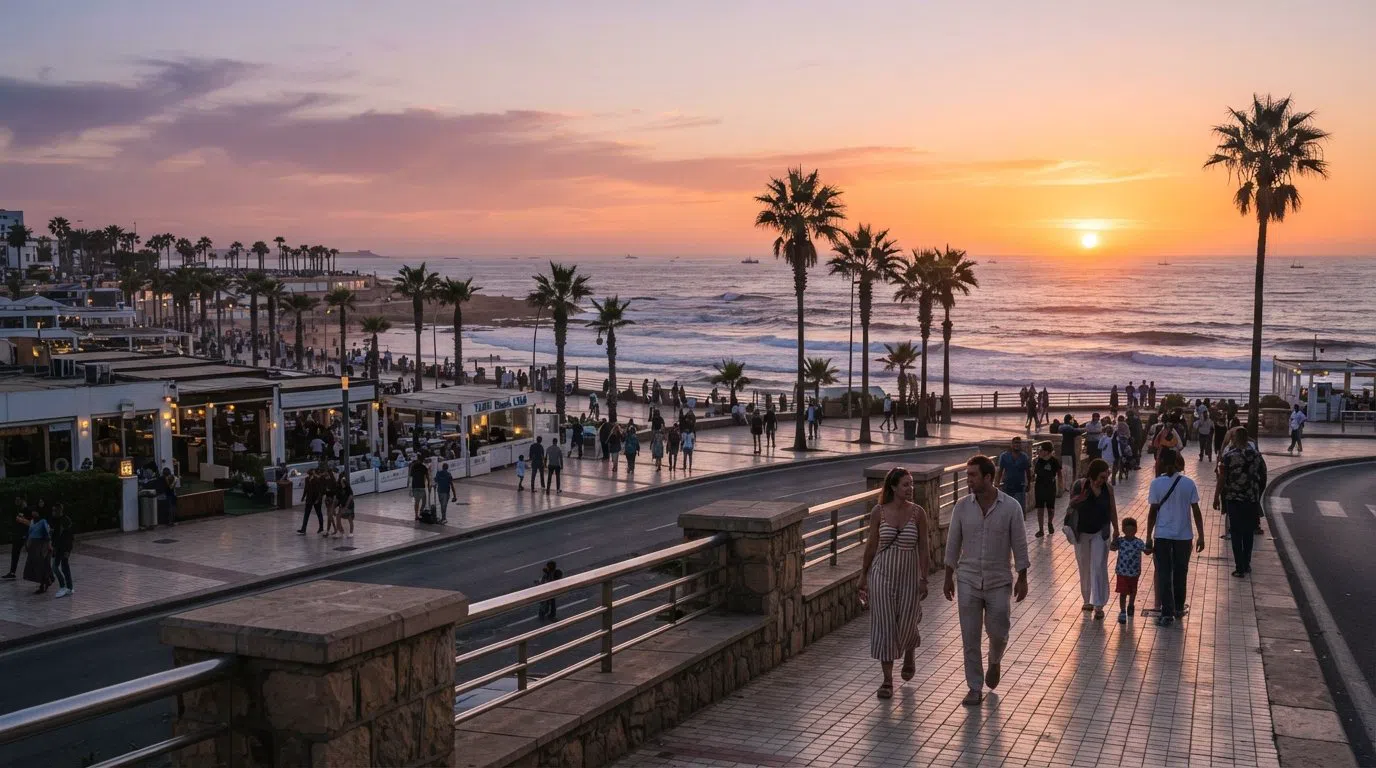
Six miles west of Casablanca’s Art Deco centre, the Boulevard de la Corniche runs with the Atlantic almost close enough to taste. The wind comes straight off the water here, a little colder, a little sharper than inland, and it changes everything: the pace, the clothes, the appetite, the hour at which people start to arrive. By late afternoon the boulevard is all palm rows, low-slung beach clubs and the long, silver pull of surf against the rocks at El Hank. By night, the same road becomes the city’s most glamorous strip, where the terraces glow, the cocktails arrive, and the ocean is turned into a backdrop for Casablanca’s social theatre.
Ain Diab is Casablanca off duty. It is where the city comes to breathe, to eat fish, to sit in the sun for hours, and then, just as naturally, to stay out far too late. The register swings quickly here: flip-flops and grilled sardines by the beach; reservation-only tables and dress codes a few hundred metres away. What gives the Corniche its character is not a single landmark but a rhythm, a coastal choreography of loungers, seafood, sunset drinks and club queues. Everything points at the sea, and everything is priced by how close it gets to it.
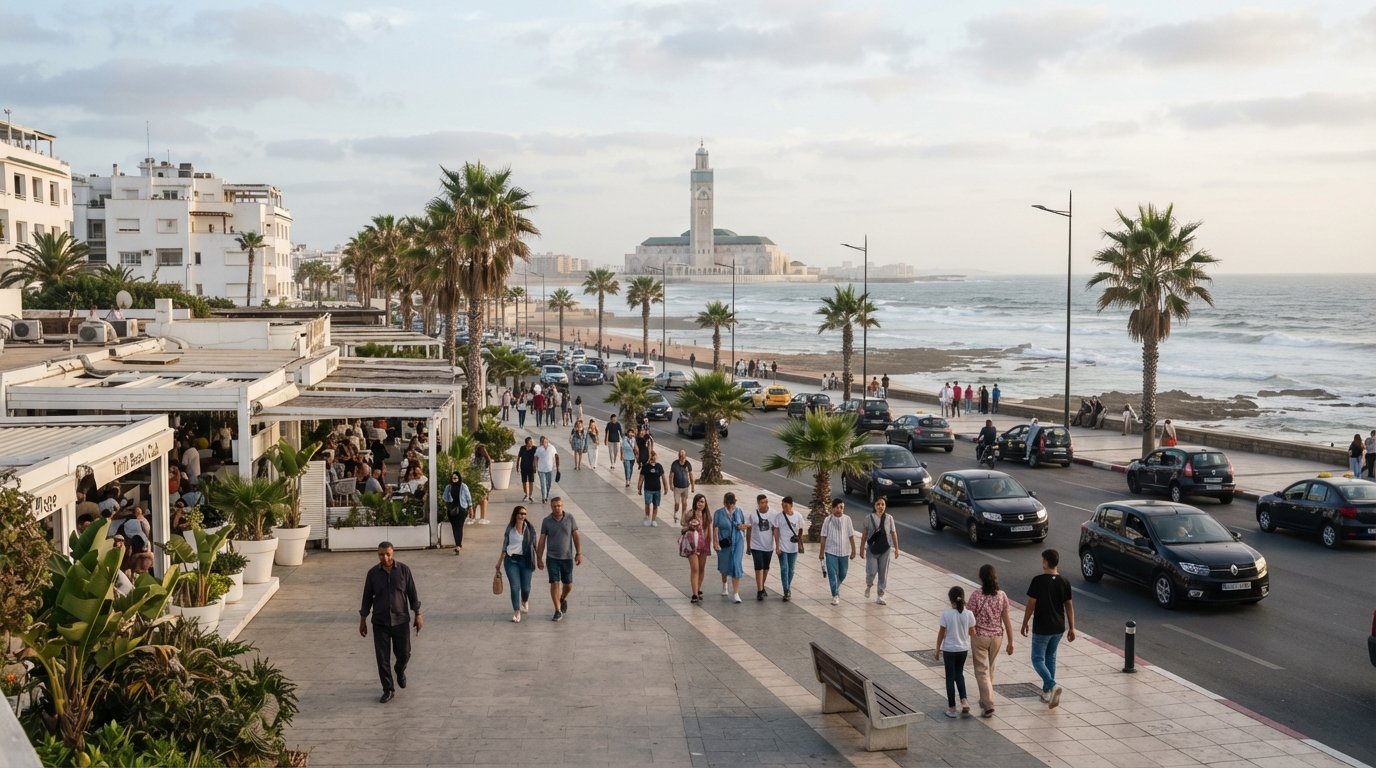
The Corniche is Casablanca’s seafront in one word: ocean. The Boulevard de la Corniche threads for a couple of kilometres along the Atlantic through Ain Diab, linking the public beaches — Lalla Meryem, Ain Diab and Madame Choual — to a chain of private clubs, seafood restaurants and, after dark, the densest run of bars and clubs in the city. It is busiest from Thursday to Sunday, when Casablancais drive out in force, valet parkers wave for every spare metre of kerb, and the traffic barely moves. That congestion is part of the scene, however irritating it may be from the car window; the Corniche is the place people choose to be seen arriving at.
The sea gives the district its social logic. During the day, families and water-sports crowds spread across the public beaches, while private clubs sell loungers, pools and long lunches to a chic, moneyed crowd. Then the light drops, the terraces switch on, and the boulevard becomes the city’s nightlife capital. The clubs here run past 3am, and the ocean is always there in the dark, black water on one side and city lights on the other.
At the eastern end, the El Hank lighthouse rises on a rocky headland, a simple vertical punctuation mark between the beaches and the Hassan II Mosque. At the western end, Morocco Mall closes the boulevard with its musical fountain and a giant walk-through aquarium. Between those bookends, Ain Diab is less a neighbourhood than a mood with a shoreline.
Live prices from our booking partners.
Free cancellation on many rooms. We may earn a commission when you book.
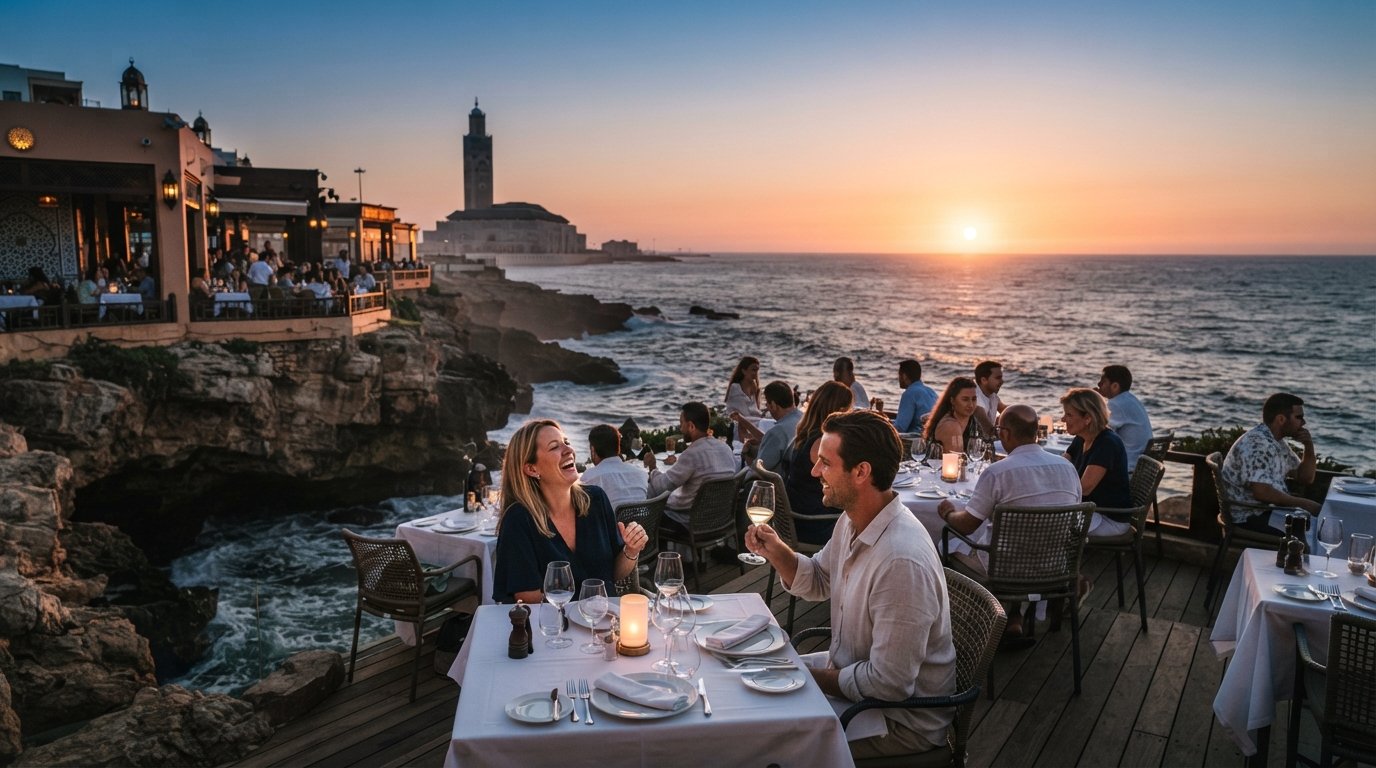
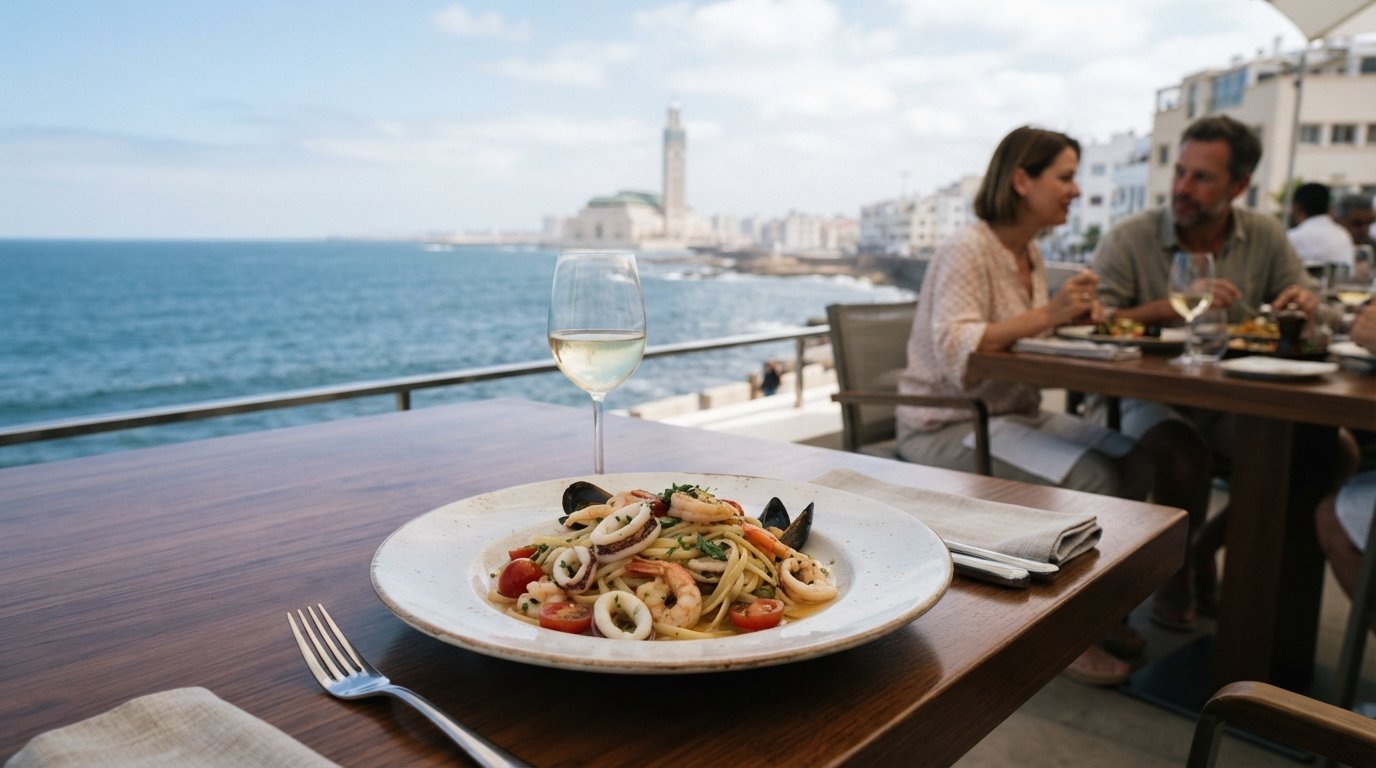
The Corniche is Casablanca’s seafood row, and the essential name is Le Cabestan (Ocean View), the clifftop institution at 90 Boulevard de la Corniche by the El Hank point. It has been going since the 1920s, which in Casablanca terms means it has watched the city change shape around it. A recent gut-renovation split it into three elegant spaces over the water, and the kitchen leans Mediterranean with French technique: daily catch, tartares, an open-air deck, and the kind of sunset table that turns dinner into an event. This is where you book ahead, especially if you want the waterfront.
Le Cabestan is the sort of room that reminds you why the Corniche can feel so self-contained. You do not come here for a quick meal; you come because the sea is part of the plate and the plate is part of the evening. The room has the hush of an occasion, but never loses the salty edge of the place itself.
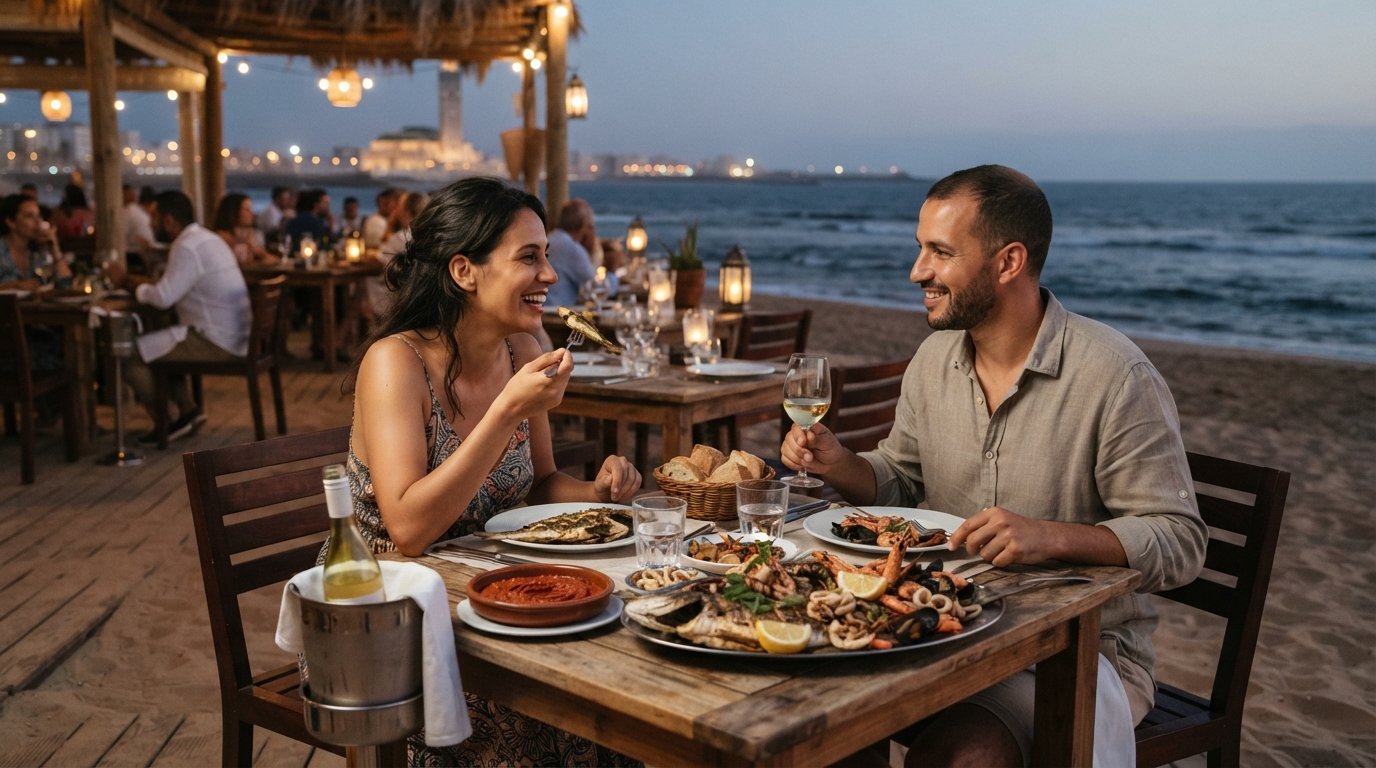
For a French beach-club dinner, Le Pilotis inside the Tahiti Beach Club spreads a large terrace over the sand. The kitchen is stronger than the setting alone would suggest: well-executed steaks, fresh fish and a Japanese-Mediterranean streak of ceviches and sushi. It is one of the more polished tables on the strip, and it knows it. Nearby, Relais de Paris by the Villa Blanca hotel is one of the most consistent addresses on the boulevard, with French-Mediterranean cooking, a standout fish tartare, house-made pastas and the catch of the day. The room is warm rather than stiff, which matters here; the Corniche can sometimes mistake gloss for atmosphere, and this place avoids that trap.
When you want something that works at any hour, Roosevelt Cafe near the corniche is the reliable in-between: coffee, cakes, snacks and light bites, the kind of place that catches the hours restaurants and clubs leave hanging between them. And if you want the cheaper, more immediate version of the coast, the snack stalls and grill counters along the beach do what the Corniche has always done best — grilled fish and sausage sandwiches, eaten with sand on your feet and the wind in your face.
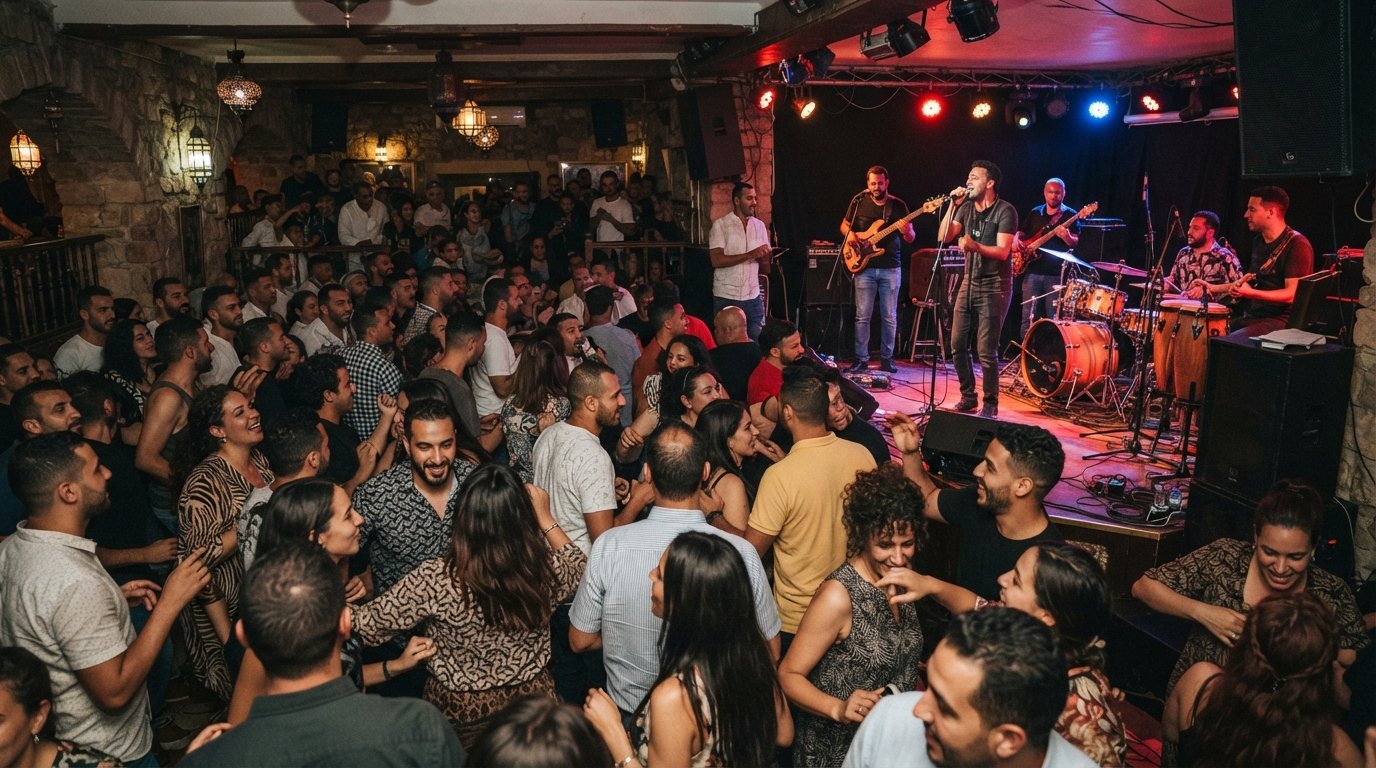
This is Casablanca’s after-dark heart. Once the beach-club loungers empty, the boulevard fills with cocktail lounges, live-music bars and clubs that keep going well into the small hours, most of them framing the Atlantic and the city lights. The Corniche is where the city comes to make noise after it has finished being sensible elsewhere.
The cult address is Amstrong, also spelled Armstrong, a live-music bar tucked between Lalla Meryem and Ain Diab beaches. It has been packing in bands, DJs and dancing crowds for more than 25 years, and nothing about the room is designed to flatter the eye. That is precisely why people love it. Locals treat it as a rite of passage, and at weekends entry starts from around 150 dirhams, usually with a drink included. The floor does not sit down. It just keeps moving.
A few degrees more polished, Sky 28 on the 28th floor of the Kenzi Tower Hotel gives you the other side of the Corniche night: floor-to-ceiling glass, strong cocktails and a dress code, best at sunset or after dark when the city lights come up. From there, the boulevard runs on through a rotating cast of clubs and lounges toward the small hours. It is one of the few places in Casablanca where the skyline itself becomes part of the drink.
A practical note matters here: alcohol is served freely along the Corniche, unlike in the more traditional quarters, and that is a big part of why the city comes here to go out. It is busiest, and priciest, Thursday to Saturday. If you are staying nearby, that is a blessing and a warning in the same breath.
The simplest thing here is also the best: walk the Corniche promenade. The pedestrian stretch runs for a couple of kilometres along the Atlantic, past the beaches and cafés, and is made for a sunrise jog, a slow evening stroll or just standing still with a coffee while the surf works at the rocks. The promenade gives the district its everyday life; without it, Ain Diab would be only clubs and car parks. With it, the place has a pulse even before the restaurants open.
Tahiti Beach Club is the long-standing favourite for a beach-club day. It has pools, loungers, restaurants and a relaxed, festive feel, and it runs on a day-entry model: roughly 200 dirhams on weekdays and 300 at weekends in high summer, which buys you a lounger and pool access. It opens from about 10:30am, and it is also a good spot for oysters on the sand. That combination — pool, sea, oysters, lunch, repeat — is the Corniche in miniature.
At the western end, Morocco Mall is a destination in its own right, the biggest mall in Africa, with an outdoor musical fountain and the AquaDream aquarium, a giant cylindrical tank with sharks, rays and thousands of fish that you can ride an elevator through. It is a strange and very Casablanca combination: consumer spectacle, family outing and sea-life theatre all folded into one enormous western bookend of the boulevard.
At the eastern end, the El Hank lighthouse is worth the climb — 256 steps to sweeping views toward the Hassan II Mosque and out over the shipping lanes. Even if you do not go all the way up, pausing at its base gives you the geometry of the coast: the rocks, the water, the sweep back along the boulevard, and the mosque set against the sea. The mosque itself, one of the largest in the world and built partly over the ocean, is only a short drive east along the coast.
The scenic beachside promenade
Local surf schools
Oceanfront dining terraces
Shopping on the Corniche means one big anchor: Morocco Mall at the western end of the boulevard. It is the largest shopping centre on the continent, with several hundred stores spanning international fashion, tech and a full food court, plus its musical fountain and AquaDream aquarium as free-to-look-at draws. It is the mall Casablancais use to orient themselves on the western Corniche, a place as much for lingering and people-watching as for buying anything in particular.
Closer in, Anfa Place sits along the coast toward Anfa with a smaller, breezier open-air run of shops, cafés and a supermarket right on the water. It is useful in the most practical sense of the word: coffee, groceries, a browse without the scale or spectacle of Morocco Mall. Beyond the malls, Ain Diab is not a market-and-souk district. For babouches, brass, rugs and pastries, you head inland to the Habous rather than the coast. The Corniche is for the sea and what the sea permits.
Stay on the Corniche if you want the beach, the seafood and the nightlife on your doorstep and do not mind taxiing to the Art Deco centre and the medina. The payoff is simple and hard to beat: ocean-view rooms, beach access and the ability to walk home after dinner. The trade-off is the weekend noise, especially if your room faces the boulevard.
At the smart end, the Val d’Anfa Hotel sits right on the water at the corner of the Boulevard de l’Océan Atlantique and the Corniche, with sea-view rooms and a beachfront position. The four-star Hôtel Club Val d’Anfa is a well-placed, good-value option about fifty metres from the beach and within walking distance of the bars and clubs. The Kenzi Tower Hotel is the landmark high-rise on the strip, with luxury rooms and the Sky 28 lounge upstairs. For something more design-led and mid-range, Villa Blanca Urban Hotel is a stylish seafront choice with Relais de Paris downstairs. Book a room facing the ocean, and ask for a higher floor if the weekend club noise is a concern.
The area’s live hotels render directly under this section — filter by price and how close to the beach you want to be.
Our best-rated stays in this neighbourhood. Prices are approximate “from” rates — confirmed at the provider when you continue. We may earn a commission if you book through our partners — at no extra cost to you.
Ain Diab sits about 6 miles, roughly 10 km, west of central Casablanca along the coast. The quickest hop from the centre is a petit taxi — around 7 to 10 minutes and typically 30 to 50 dirhams — but agree the fare before you get in, as meters are not always used. It is the sort of short ride that can feel longer on a Thursday evening, when the Corniche is clogged with weekend traffic and everybody seems to have had the same idea at once.
By public transport, the T2 tramway serves Ain Diab. The nearest stops to the beach strip are Aïn Diab and Cité de l’Air, both about a 10-minute walk to the seafront, and the ride from the centre takes around 40 minutes for roughly the price of a coffee. City bus line 5 also reaches Ain Diab. Once you are on the Corniche itself, it is flat and walkable, and the promenade links the beaches, restaurants and clubs on foot.
Driving is easy enough, though weekend evening traffic and parking on the boulevard can be slow, and valet parking is common outside the busier venues. The Hassan II Mosque is a short drive east along the coast, and Mohammed V International Airport is about 40 to 50 minutes away by road, allowing more in traffic. Ain Diab is close enough to the city to feel central, and far enough to feel like a change of weather.
Gallery
Yes, if you want the beach, seafood and nightlife on your doorstep and are happy to taxi to the historic centre and medina. You’ll find ocean-view hotels across the range, from Val d’Anfa and Kenzi Tower to the mid-range Villa Blanca, and you can walk to dinner and drinks. Stay in Gauthier or Centre Ville instead if you want to walk to the Art Deco sights.
The fastest option is a petit taxi: about 7 to 10 minutes and roughly 30 to 50 dirhams, with the fare agreed in advance. The T2 tramway also runs to Aïn Diab and Cité de l’Air, about a 10-minute walk from the seafront, in around 40 minutes for about the price of a coffee. City bus line 5 also serves the area.
Yes. The private beach clubs use a day-entry model that includes a lounger and pool access. Tahiti Beach Club, for example, charges roughly 200 dirhams on weekdays and about 300 at weekends in high summer, and opens from around 10:30am. The public beaches beside it are free.
Seafood, beach-club days, sundowners and nightlife. It is Casablanca’s coastal playground: easy for a long lunch, a swim, a sunset drink and a late night, all in one stretch of boulevard.