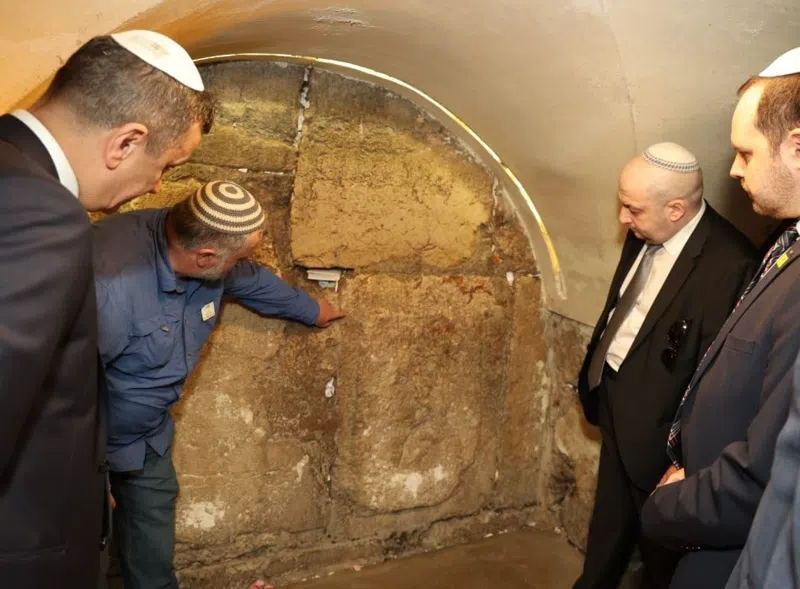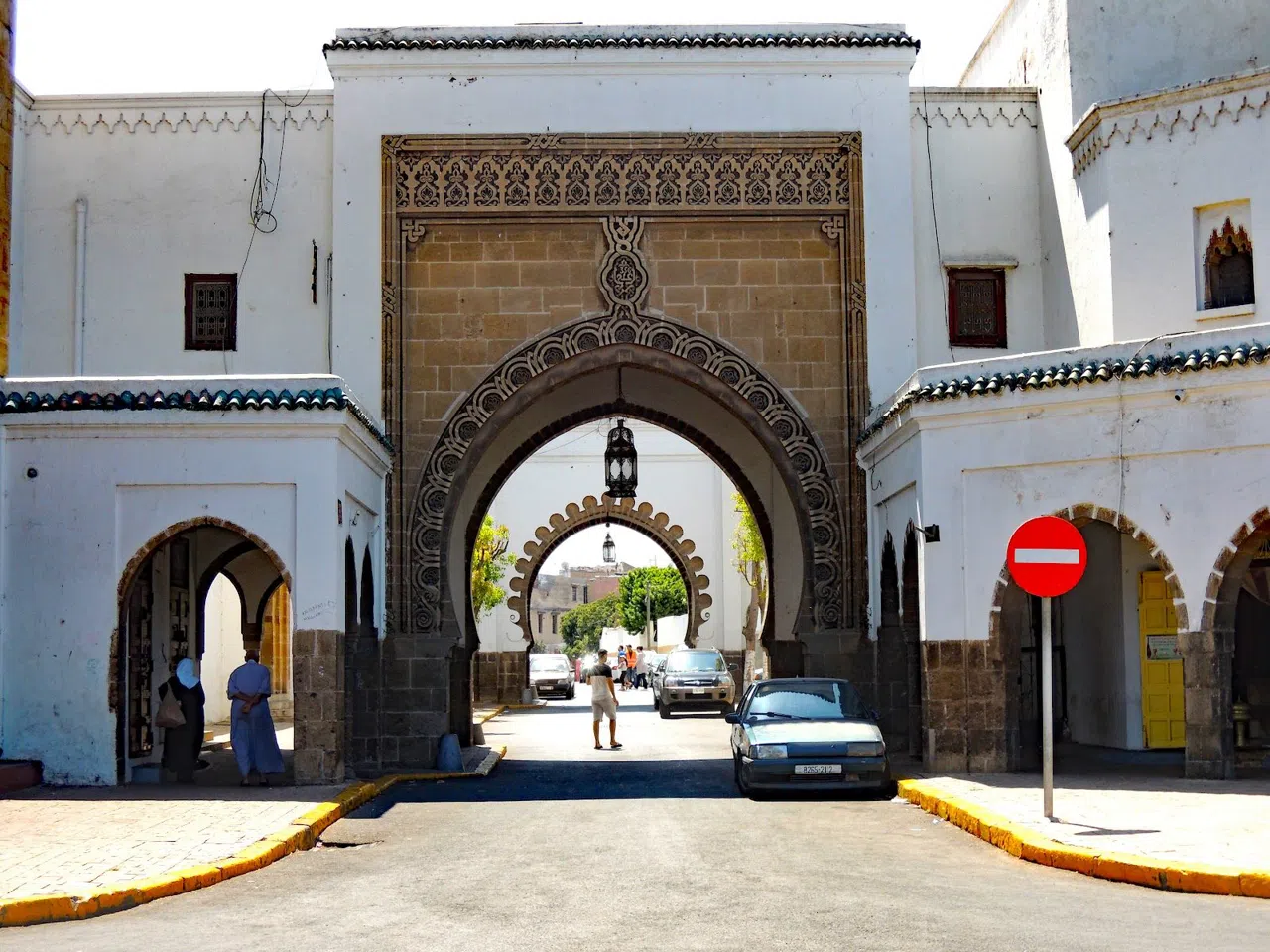

Casablanca's walled quarter begins a few hundred metres from a working container terminal, and the transition is abrupt: eight lanes of boulevard, a gate, then a lane barely wide enough for two people and a handcart coming the other way. Inside, men are unloading socks and tomatoes, a barber has moved his chair into the street, and nobody is performing for your benefit. This is the Ancienne Medina, Morocco's most compact old town and the only one with a city of more than three million people pressing directly against its ramparts.
What is actually behind the walls
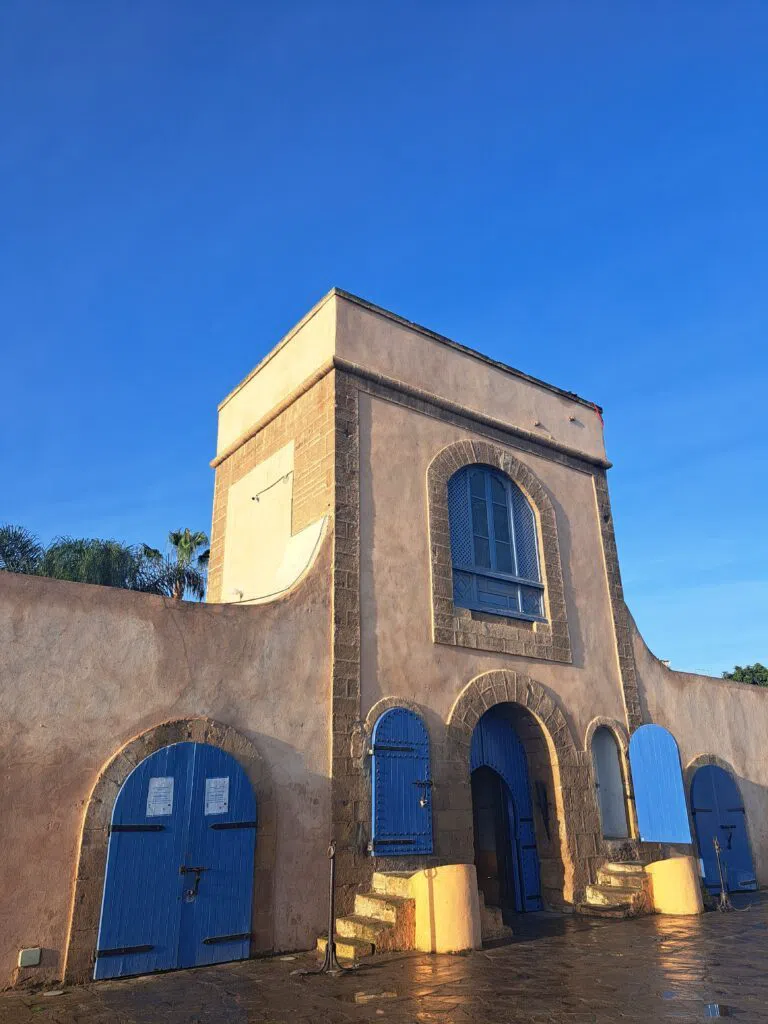
The Old Medina of Casablanca (Ancienne Medina) (between Place des Nations Unies and the port) is younger than visitors assume. The settlement here was called Anfa, and the Portuguese destroyed it in 1468, returning in 1515 to build a fort they called Casa Branca. That fort was abandoned after the earthquake of 1755, and the quarter you walk today is essentially the work of Sultan Sidi Mohammed ben Abdallah, who rebuilt the town in the 1770s as ad-Dar al-Bayda and gave it the walls, gates and coastal gun bastions that still frame it. So this is an eighteenth-century port town rather than a medieval imperial capital, and it reads that way: fewer monuments, more trade.
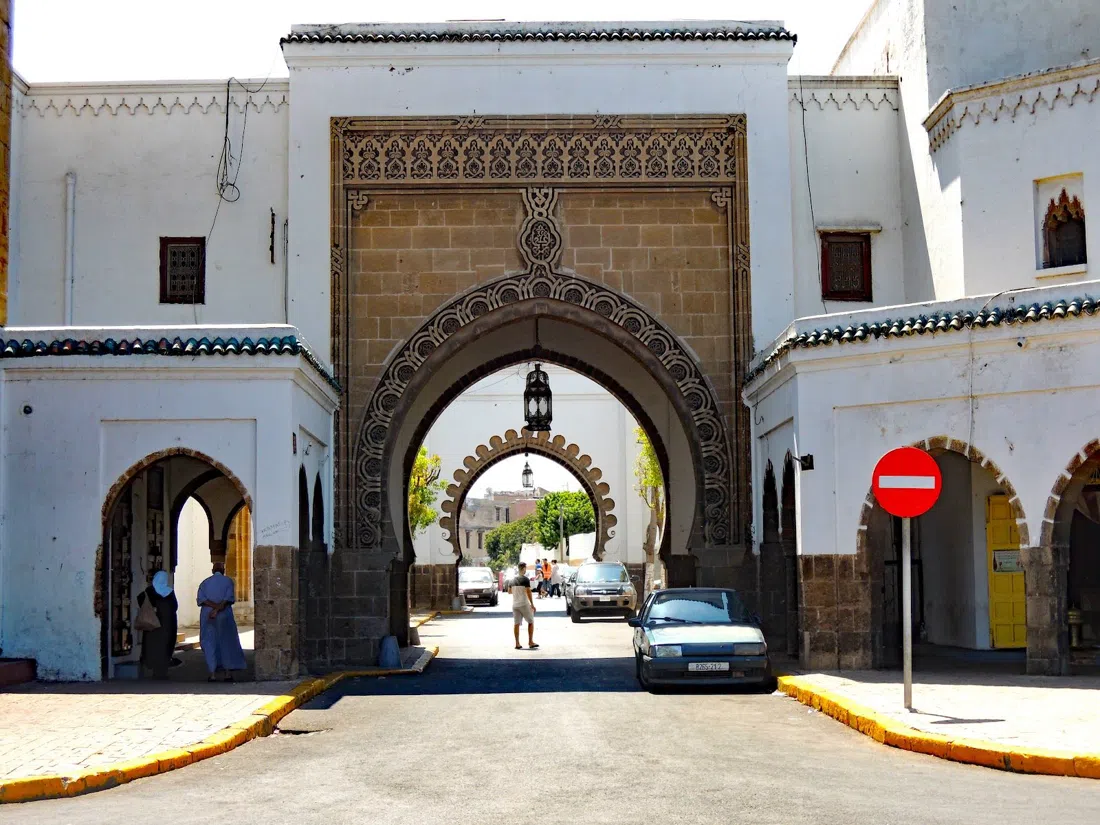
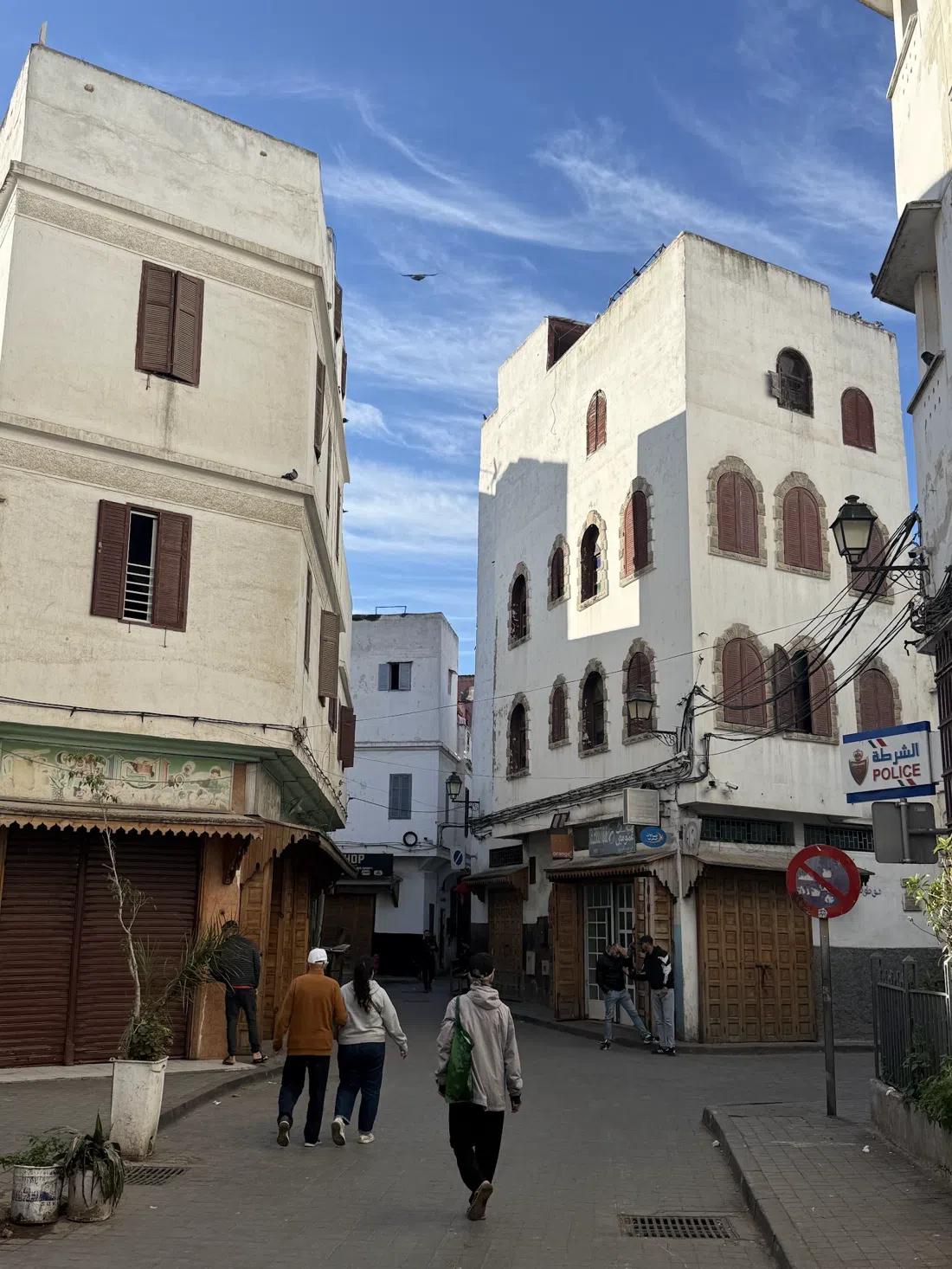
The second thing that shaped it happened in 1912. Under the French protectorate, the planner Henri Prost laid out an entirely new city of boulevards and art deco frontages outside the ramparts, which meant the medina was never redeveloped and never became the centre of gravity either. It stayed a dense residual triangle, perhaps fifteen minutes' walk end to end, while the modern city grew around it. The result is a quarter that functions as a neighbourhood and a wholesale market rather than a heritage site: whitewashed houses with blue and green trim, satellite dishes, fabric by the metre, spice sacks, counterfeit trainers, cobblers, phone-repair hatches, two living shrines, and the smell of grilled sardines drifting in from the fish end.
If you have arrived expecting the labyrinth of the great inland medinas, calibrate now. You cannot really get lost here, because the boulevard and the sea box you in on two sides, and the architecture will not stop you in your tracks. What the Ancienne Medina offers instead is the texture of an ordinary Moroccan working district twenty minutes' walk from a cruise berth, which is a rarer thing than it sounds. For wider orientation on the rest of the city, the Casablanca guide covers the districts beyond the walls.
Coming in from the port side
Two entrances matter. Bab Marrakech (southern wall, off Boulevard Félix Houphouët-Boigny) is the best-known gate and the clearest place to start if you are navigating alone. The lanes immediately inside it are the flea-market and wholesale side, selling clothing, produce and household plastic, and they are where people from the surrounding districts genuinely shop rather than where tourists get funnelled. The gate itself is an open square that absorbs any number of people; the lanes behind it cannot, and a party of more than about eight will fragment within two minutes.
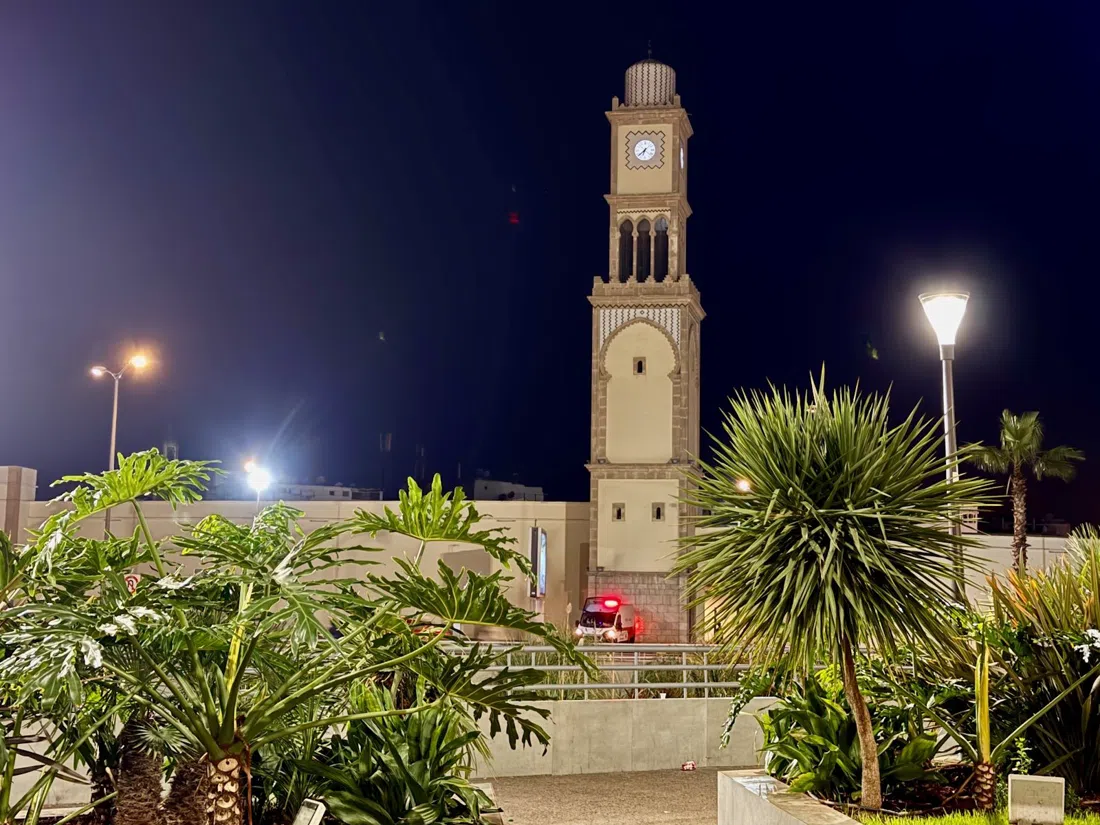
The other anchor is the Casablanca Clock Tower (Tour de l'Horloge) (Place des Nations Unies, north-east corner of the walls), which is less a sight than a rendezvous. The present tower was rebuilt in 1993 after the 1908 original was demolished, and it stands at the one junction every taxi driver, tram passenger and shuttle driver knows. Use it as the backstop: enter at one gate, wander, and whenever you want out, walk towards the traffic noise and the tower.
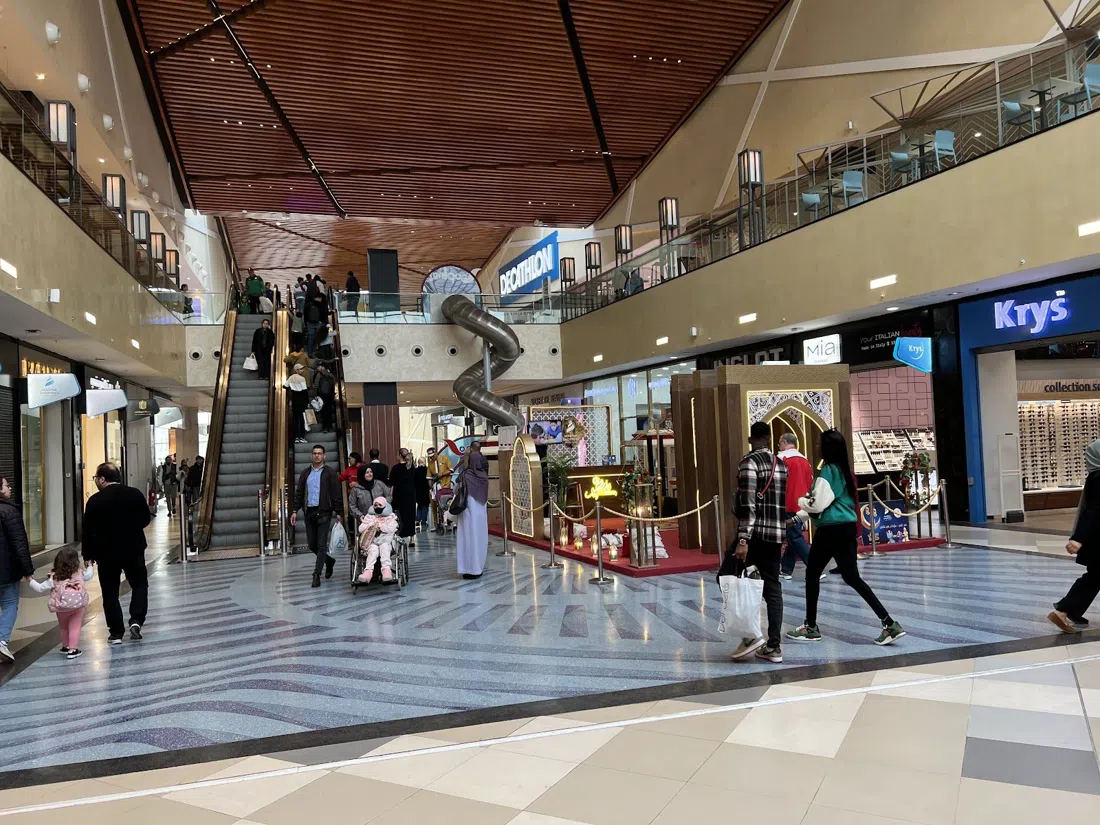
Between the port and the gate sits the Marina Shopping Center (Casablanca Marina waterfront), which I mention without apology because it solves the problems the medina does not. It has clean toilets, working ATMs and air conditioning, it is step-free throughout with lifts and escalators, and its 34-outlet food court will seat a coach party without a reservation. Opening hours are 10:00 to 21:00 and entry is free. For anyone travelling with a wheelchair, a pushchair or a hip that dislikes cobbles, the marina promenade and the esplanade are the accessible part of this walk; the medina lanes themselves are uneven, stepped in places, and often half-blocked by stock.
How long it really takes
A brisk pass-through, gate to gate, takes twenty-five minutes. A proper first visit, stopping, looking into workshops, drinking a mint tea, walking down to the shrine and back, runs to about two hours. Add shopping and haggling and you are at three, which is also roughly the length of a structured medina walk. Beyond three hours you are repeating yourself; this is not a quarter that rewards a full day.
Coach groups should plan for less ground, not more. Parties enter on foot at Place des Nations Unies or Bab Marrakech and end up walking single-file in the narrow lanes, which halves the pace and makes commentary almost inaudible. Splitting into two groups of ten and agreeing to meet at the clock tower works far better than keeping forty people nominally together.
Door prices, guides and booking ahead
There is no door and no ticket. The streets are public, nobody enforces a dress code at the gates beyond ordinary good sense, and your only costs inside are what you choose to spend: haggled souvenirs typically land somewhere between 30 and 300 MAD depending on what it is and how patient you are.
So the question is not entry but explanation, and whether to pay someone for it. CitizOn (Casablanca-based walking-tour operator, meets near the medina gates) runs scheduled group walks and private bookings in French, English and Arabic at 200 MAD per adult and 90 MAD for under-18s, about three hours, covering forty-plus stops in the old Makhzen district. That is the fair benchmark for what a guide adds: history you will not deduce from the walls, access to workshops you would walk past, and someone to absorb the attention that an obvious visitor attracts. It is also a fraction of the price of a half-day car tour.
If you are arriving by ship and want the medina bundled with the mosque and a driver, guided options exist and are attached to this page as a separate card rather than buried in my prose. The numbers worth knowing before you compare them: those bookable tours carry 7,367 traveller reviews between them, the leading one is rated 4.8 out of 5 from 3,066 reviews, they operate seven days a week, and prices start from 52 USD per person. That last figure usually includes the mosque entry ticket, which is the part worth checking line by line, because the mosque is the only element of this itinerary with a real timetable and a real queue.
The mosque half of the day
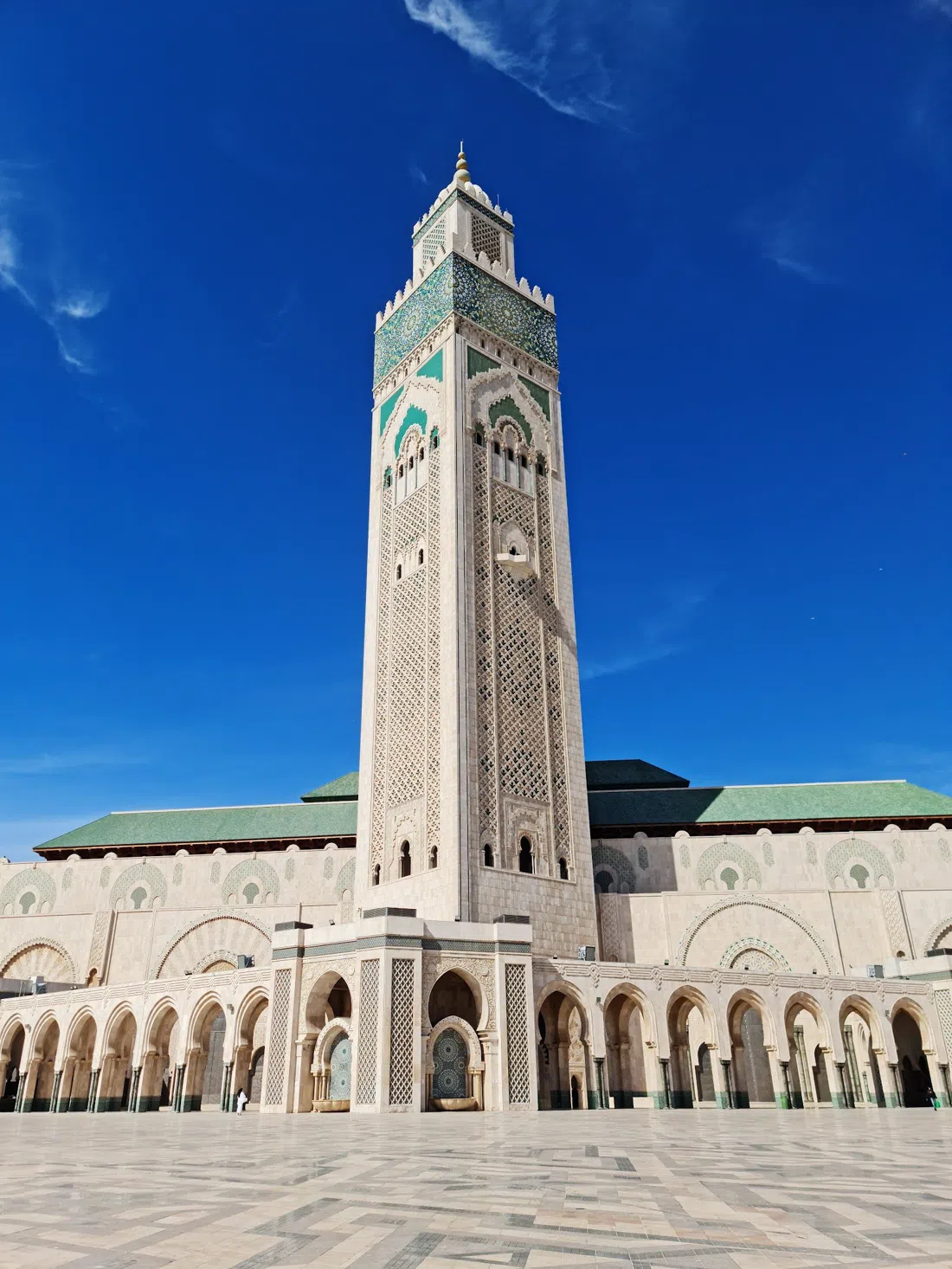
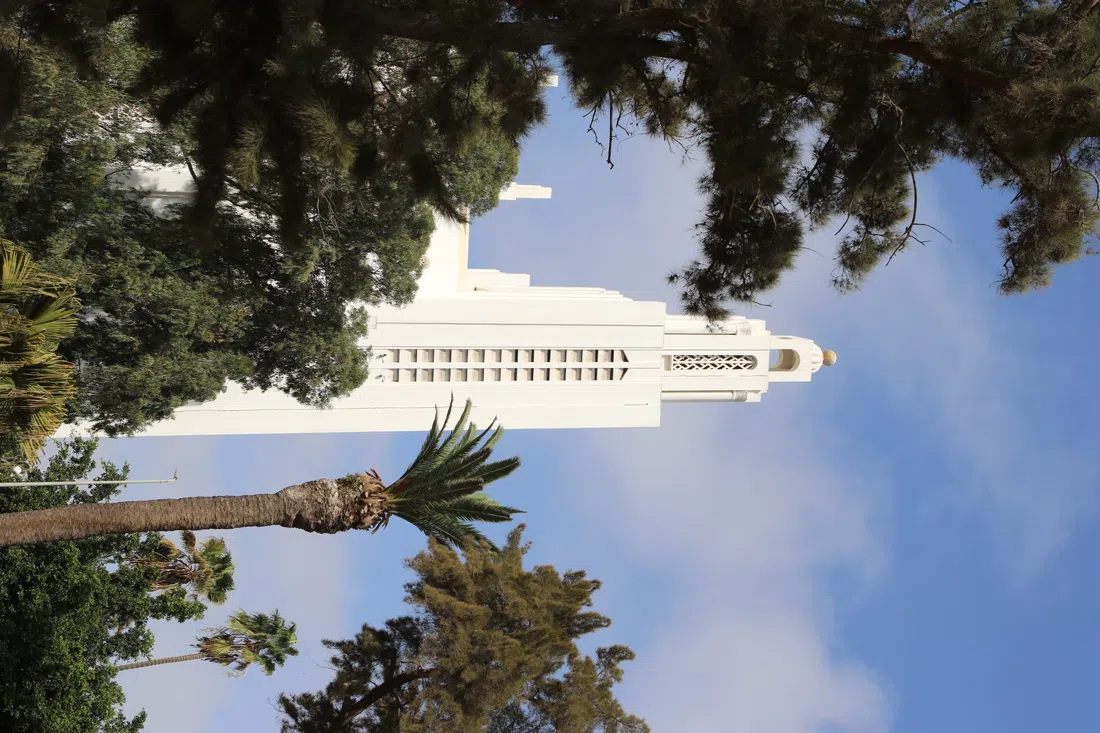
Hassan II Mosque (Boulevard Sidi Mohammed Ben Abdallah, ten minutes' walk north-west of the medina) is the paired half of almost every medina visit, and the only part that can go wrong logistically. Designed by the French architect Michel Pinseau and completed in 1993, it stands partly over the Atlantic with a 210-metre minaret, and the esplanade is free to walk at any hour, which is where most of the photographs come from.
Going inside is different. Non-Muslims must join the official guided tour, which runs in fixed slots, with fewer of them on Fridays. Arrive 30 to 45 minutes before the slot you want, or let a tour hold one for you. Entry is 140 MAD for a foreign adult, 70 MAD for foreign students and residents, 30 MAD for children aged six and over, and free for under-sixes. Groups of 100 or more get 50% off; a VIP private visit for up to ten people costs 2,200 MAD. Dress modestly, expect to carry your shoes, and budget an hour inside including the hammam level beneath the prayer hall.
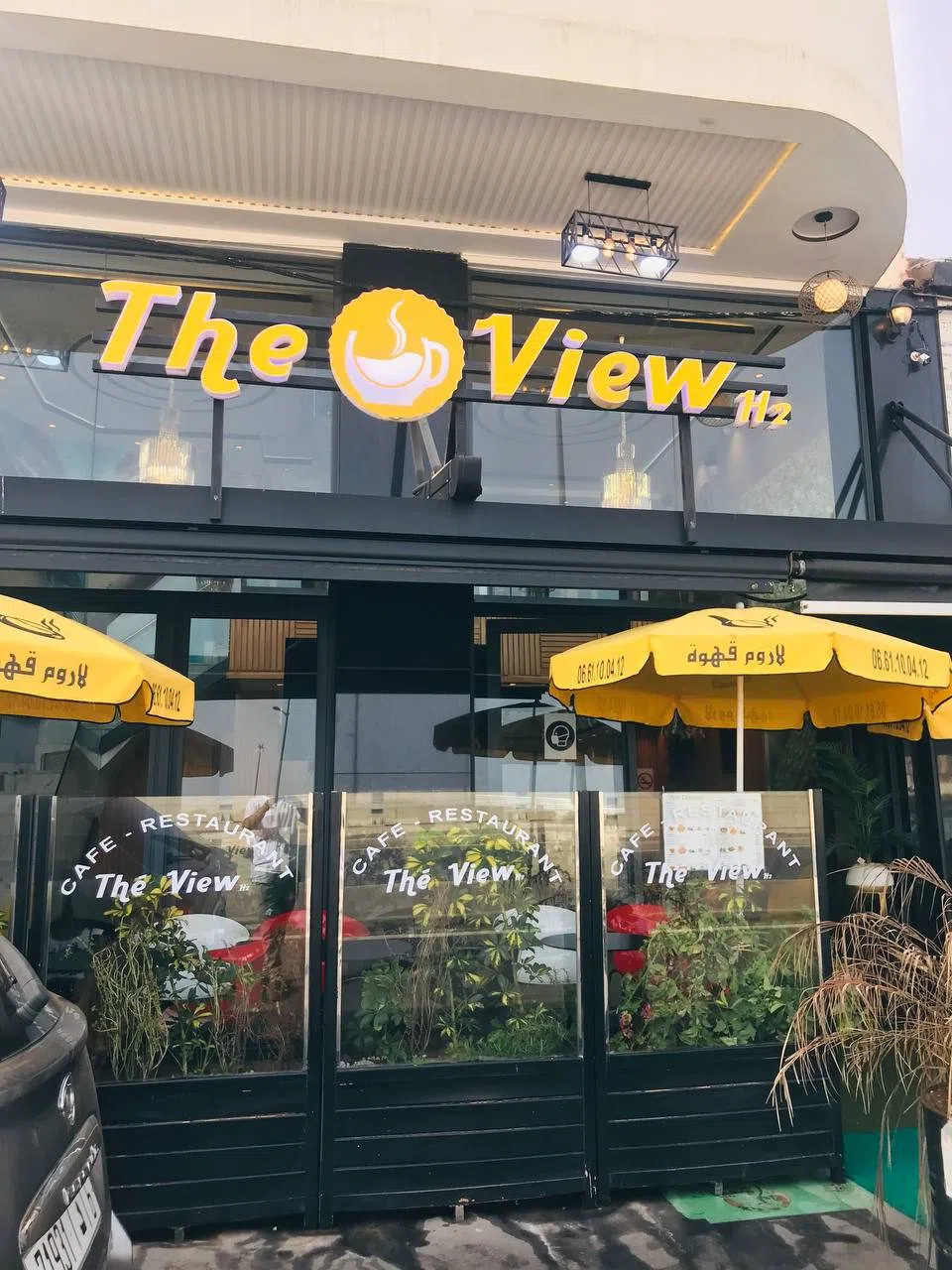
For the postcard view with a chair under you, The View H2 (facing the mosque esplanade) is the cheap answer: open 07:30 to 23:00 daily, brunch and mains roughly 80 to 180 MAD, walk-in friendly with an upper floor for larger parties, and reachable by phone on +212 644 08 05 01 if you are a group. Those hours cover both an early ship arrival and a late sailing, which is the practical reason to know about it.
Shrines, prayer and what to do with your camera
The Mausoleum of Sidi Allal el-Kairouani (northern edge of the medina, near the sea wall) is a two-minute detour from the main lanes and a useful corrective to the idea that you are walking through an attraction. Sidi Allal is the patron saint of the city's fishermen, and local legend ties his shrine to the city's name. It is an active place of worship: non-Muslims generally view the exterior only, there is no entry during prayer, and the right approach is a small quiet group rather than a dozen people with cameras up.
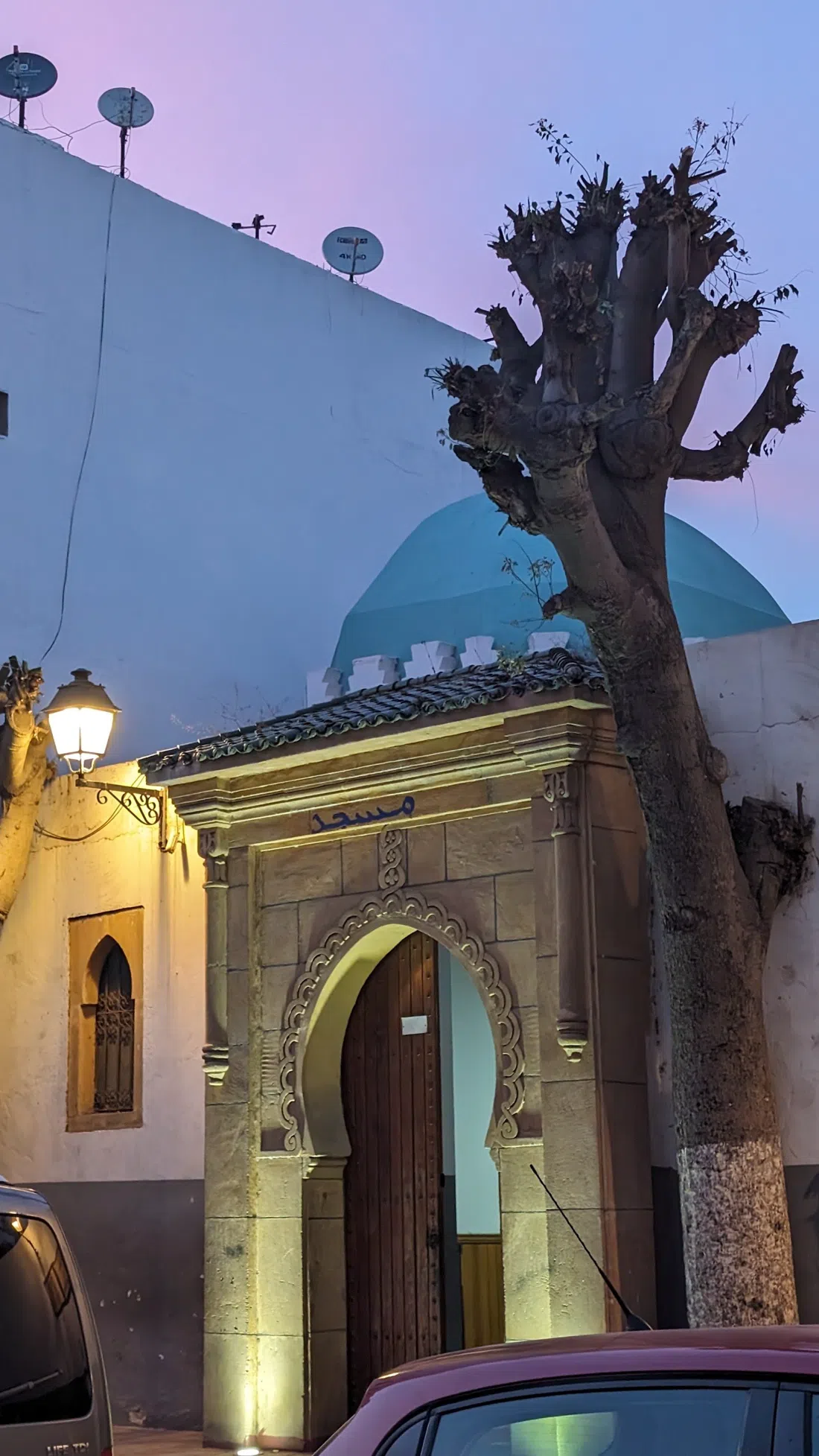
That etiquette extends to the whole quarter. People live here and most of them are working. Ask before photographing a face or a stall, accept no as an answer, and do not photograph inside the two shrines. During Ramadan the lanes thin out through the afternoon and then fill after sunset, which changes the character of a visit entirely: quieter and easier before dusk, and genuinely lively after.
When the lanes become too much
If the old medina defeats your group (too tight, too hot, too fast), the city offers a planned alternative twenty minutes south. Quartier Habous (New Medina) (Habous, south of the royal palace) was laid out from 1917 by the French architects Auguste Cadet and Edmond Brion as a deliberate modern reinterpretation of a Moroccan quarter: wide arcades, open squares, swept pavements, and the best craft and book shopping in the city. It is far easier for a group than the old lanes. Note that the Mahkama du Pacha here is now closed to visitors inside, facade only. While you are there, Pâtisserie Bennis Habous (Habous arcades) has been trading since the 1930s and remains the benchmark for Moroccan pastry in this city, sold by weight at roughly 20 to 80 MAD a box, from a counter hatch with no seating, so a group queues on the pavement. It is also the one souvenir in Habous that does not need haggling over.
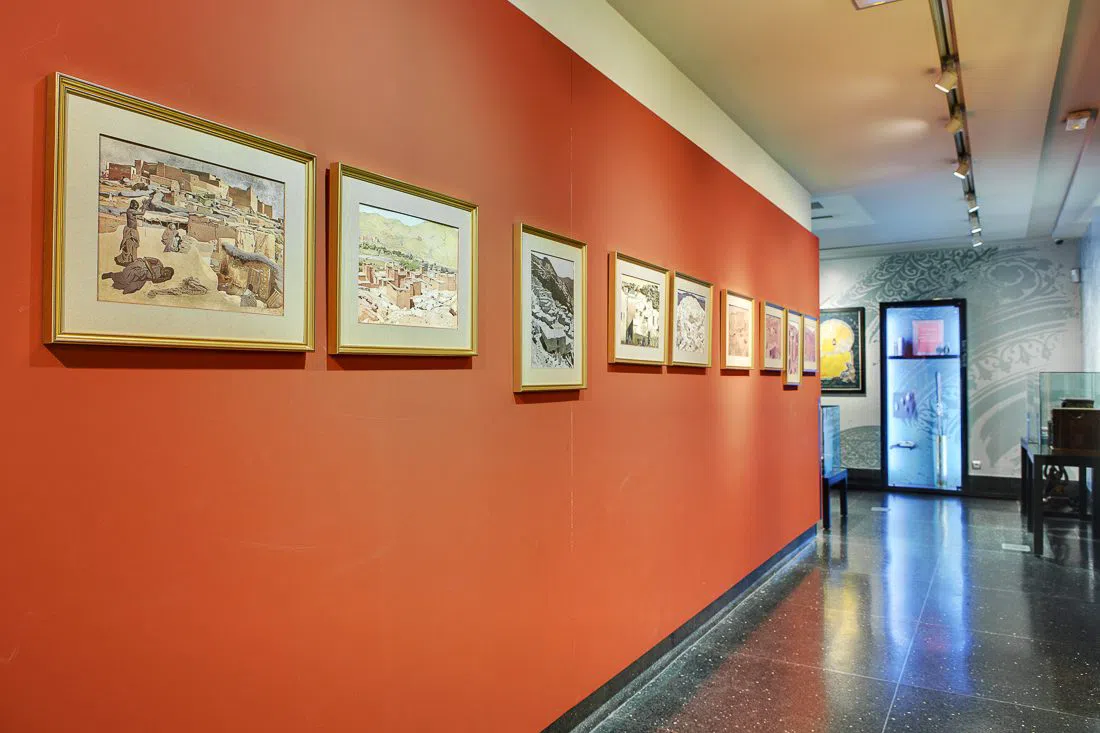
Two indoor options pair well with half a day in the walls. Ex-Église du Sacré-Cœur (Parc de la Ligue Arabe) reopened in November 2023 after eight years of restoration and is now a deconsecrated exhibition space, open daily 08:00 to 18:30, free, and the most dramatic interior in the city after the mosque, though access can be refused when a private event or installation is on. And the Musée de la Fondation Abderrahman Slaoui (Rue du Parc, ten minutes from the medina) is a private collector's villa with rotating shows alongside the permanent rooms, 60 MAD for adults, 40 MAD for residents, free for under-12s. Check before you walk: it opens Tuesday to Saturday only and closes for a summer break, and large coach parties need splitting because the rooms are small.
Eating at the rampart line
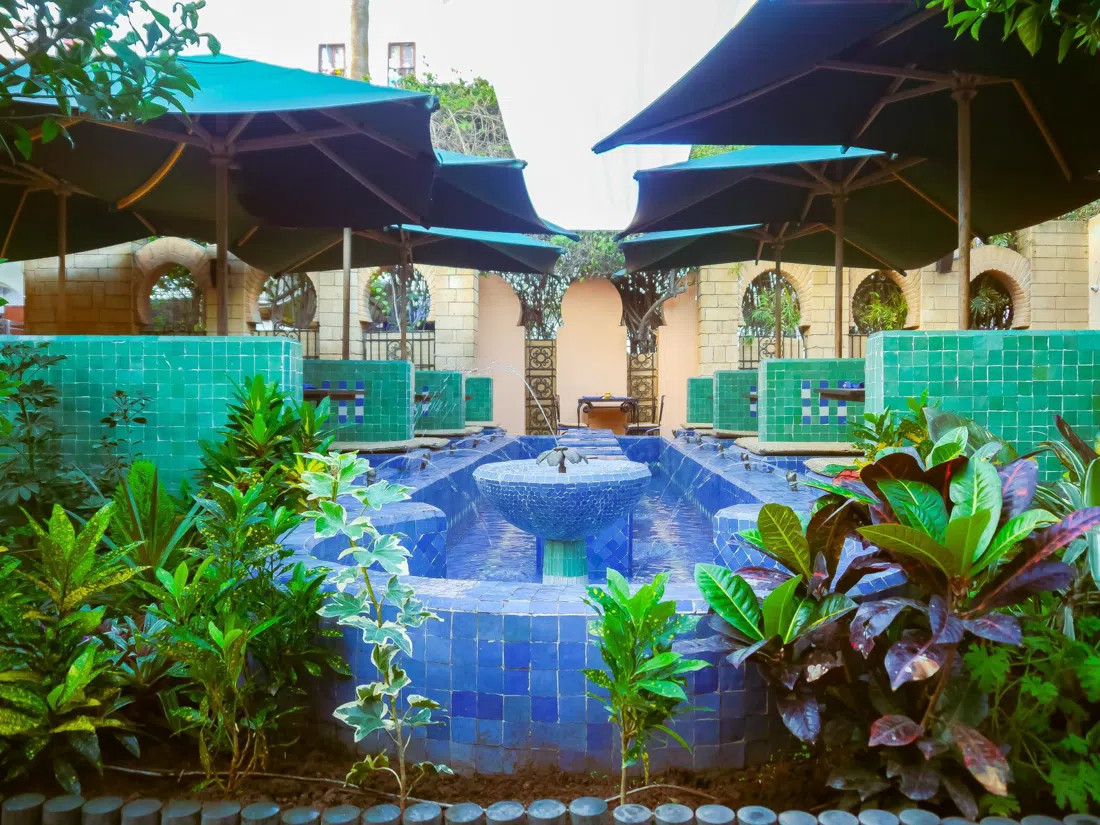
La Sqala (inside the Sqala bastion, medina's western wall) is the most reliable place to park a group at the edge of the quarter. It sits literally inside the old fortification, opens 08:00 to 23:00 daily, takes groups openly (family events, conferences, full privatisation, brochure on request), and works equally for breakfast or a two-hour lunch. Mains run roughly 100 to 200 MAD; a mint tea and pastries cost a fraction of that.
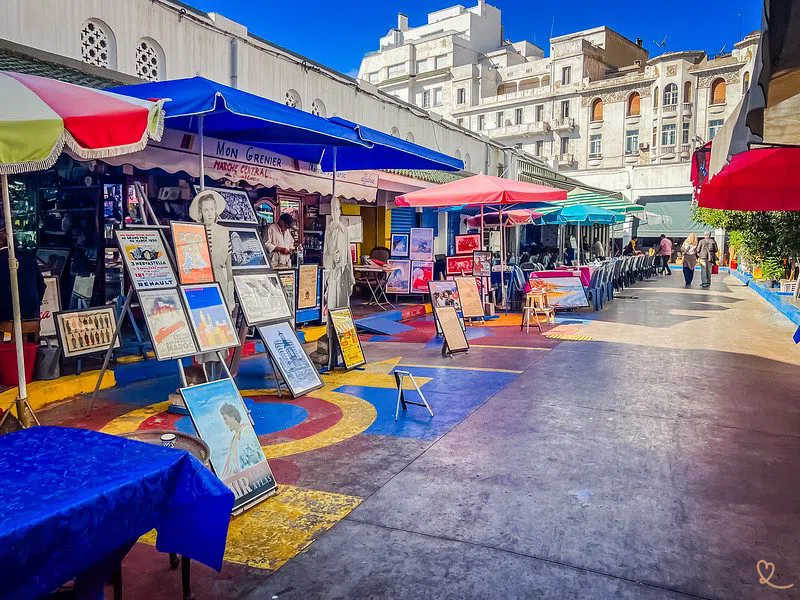
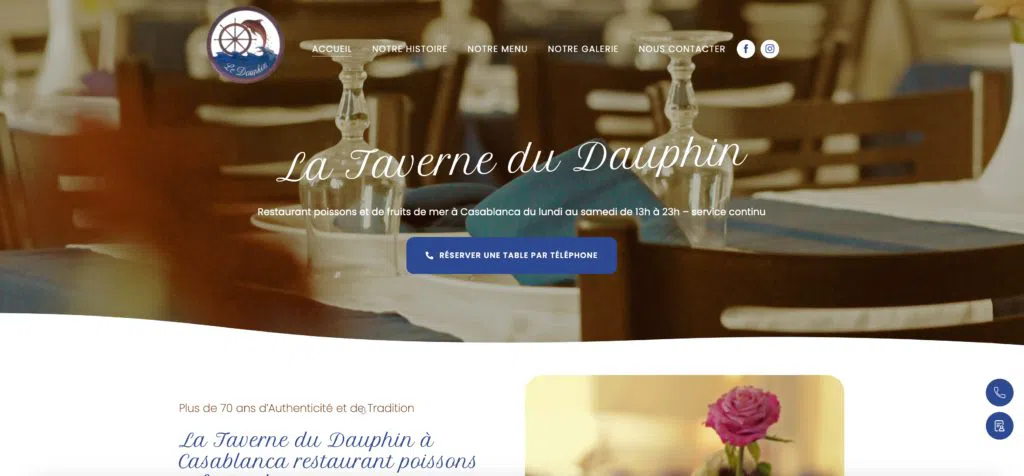
For seafood, Taverne du Dauphin (Boulevard Félix Houphouët-Boigny, two minutes from the medina and the port gate) has been family-run since the late 1950s and is the honest alternative to the theme restaurants: mains 100 to 210 MAD, weekday set lunches at 120 and 150 MAD. It welcomes groups and events but the room is genuinely small, booking is by phone only, and it closes on Sundays, which catches out cruise passengers more often than anything else on this page. Marché Central (Boulevard Mohammed V, ten minutes from the medina) is the better food stop of the two: pick a fish at a stall, hand it to one of the grill counters, and eat it for roughly 60 to 150 MAD a head. The central aisles take a group comfortably, the grill counters seat only a handful each, and the whole market works in cash.
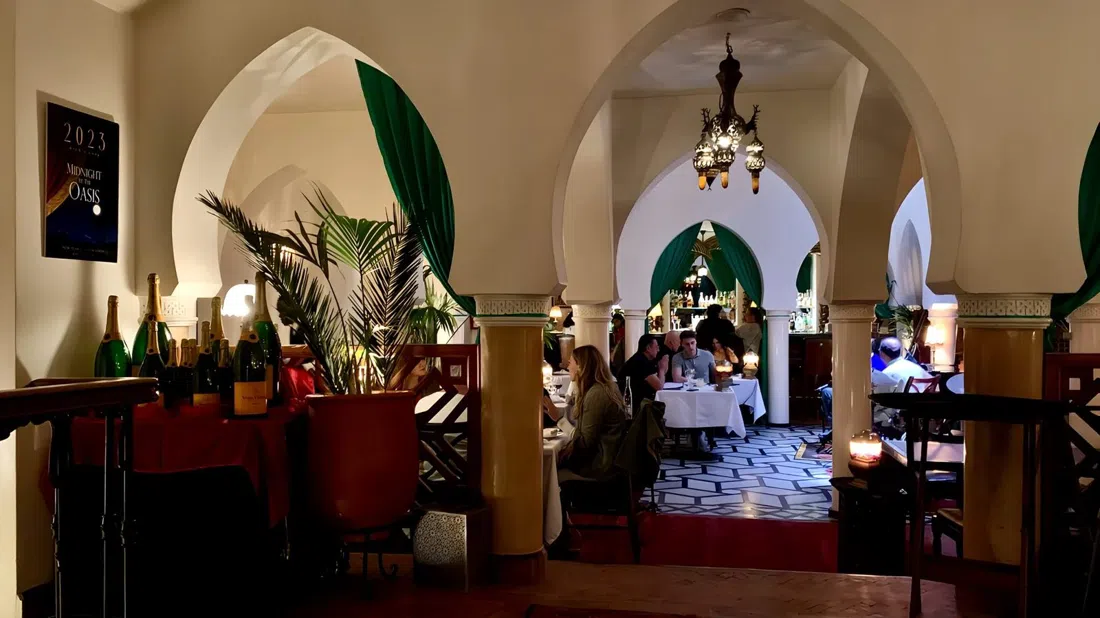
Then there is Rick's Café (Boulevard Sour Jdid, set into the medina ramparts), opened in 2004 as a deliberate recreation of the bar from the film. It earns its place here on location and atmosphere rather than novelty, and expect 250 to 500 MAD a head with drinks. Reservations are essential and often needed well in advance, by phone or email only. A group that has not booked will not get in, and that is the policy rather than a soft door.
Best time to go
Go between 09:00 and 11:00. The wholesale deliveries are finishing, the light is still low enough to reach the lanes, the shopkeepers are opening up in good humour, and the quarter has not yet compressed. Midday is when the lanes feel genuinely tight, a working neighbourhood on its lunch hour with handcarts and mopeds competing for the same metre of width, and the late afternoon is pleasant again from about 16:00 until the shutters start coming down around sunset.
By day of the week: Friday is the day to think about, because the mosque runs fewer tour slots and the early afternoon is quiet across the city, so pair a Friday medina walk with a later mosque slot or skip the interior. Sunday closes Taverne du Dauphin and the Slaoui museum, while the flea-market side of Bab Marrakech is at its busiest. Tuesday to Thursday is the frictionless window if you have the choice.
Seasonally, this is an Atlantic city rather than a desert one. April to June and September to November give you warm, walkable days and cool mornings, sometimes with a sea fog that burns off by ten. July and August are hot and crowded, and the Slaoui museum shuts for part of the summer. Winter is mild but genuinely wet, and the medina's lanes puddle and get slippery underfoot. There is no season in which the quarter closes or empties, which is the advantage of visiting a place that is not a monument.
Is it worth it
Yes, with a condition attached: it is worth two to three hours, not a day, and it is worth more with context than without. If you like watching a city work, the trades, the negotiation, the mechanics of a market, you will enjoy this quarter precisely because it has not been tidied for you. If your interest is architecture or decorative craft, you will find more of both in Habous and incomparably more at the mosque.
It suits independent travellers and couples best, who can duck into a workshop, drink tea for forty minutes and change plans at will. Cruise passengers do well on a half-day plan that pairs the medina with the mosque, because the two are a ten-minute walk apart and the mosque is the half with a timetable. Large coach groups get the least out of it, and anyone bringing twenty or more should accept that the lanes will be a brisk single-file passage with the real stops happening outside the walls. Families do fine in the mornings; prams do not fit.
It is not a bargain-hunting destination. Prices in the souvenir lanes start high for obvious visitors and the quality is mixed, so treat the shopping as incidental and do your serious craft buying in Habous.
Practical notes
Casa-Port rail station is a five-minute walk from the clock tower, and the T1 tram stops at Place des Nations Unies, which puts you at the medina's north-east corner. Red petit taxis are plentiful; insist on the meter rather than agreeing a fare, and expect single-digit to low-teens dirham for short hops across the centre. From the cruise berths it is a flat fifteen to twenty minutes on foot via the marina, entirely walkable in daylight.
The dirham is a closed currency, so you arrive without it. Draw cash at the Marina Shopping Center ATMs before you go in, and ask for small notes: Marché Central's stalls and grills are cash only, and nobody haggling over a 40 MAD purchase wants a 200 MAD note. Card acceptance inside the medina is close to nil; at La Sqala, Rick's Café and the museums it is normal.
A self-guided morning costs nothing but your lunch. A full honest day looks like this: free entry to the medina, 140 MAD for the mosque tour, 200 MAD if you take the three-hour guided walk, and 100 to 200 MAD for lunch at the rampart line. That is under 700 MAD per person all in, with souvenirs on top. The bundled guided alternative, driver and mosque ticket included, starts from 52 USD per person and runs seven days a week, which is the comparison to make if your time ashore is short. Book the mosque slot and any restaurant table before you arrive; the medina itself needs no booking at all. If you want to stay within walking distance of the walls, start with a Casablanca hotel search around the port, the marina and the Boulevard Mohammed V spine, all three of which put you ten minutes from a gate on foot.
Wear shoes you can walk uneven ground in, carry a bottle of water in summer, and keep your phone in a front pocket in the busiest lanes, not because the quarter is dangerous but because it is crowded, and crowds are crowds everywhere.