In this area
Anfa
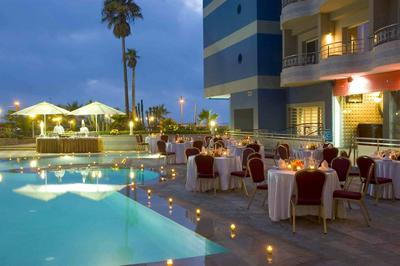
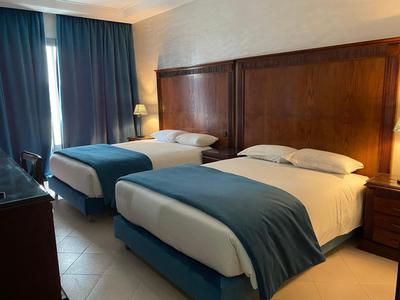
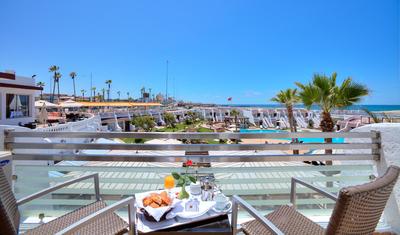
Casablanca Le Lido Thalasso & Spa (ex Riad Salam)
6.3· 1,476 reviews
approx. from£91 / nightSee prices
The Casablanca issue
A calm, green plateau above Casablanca’s noise, Anfa folds modernist villas, a racecourse, a finance district and Atlantic air into the city’s smartest residential address.
By Leila TaziCasablanca, quartier by quartier
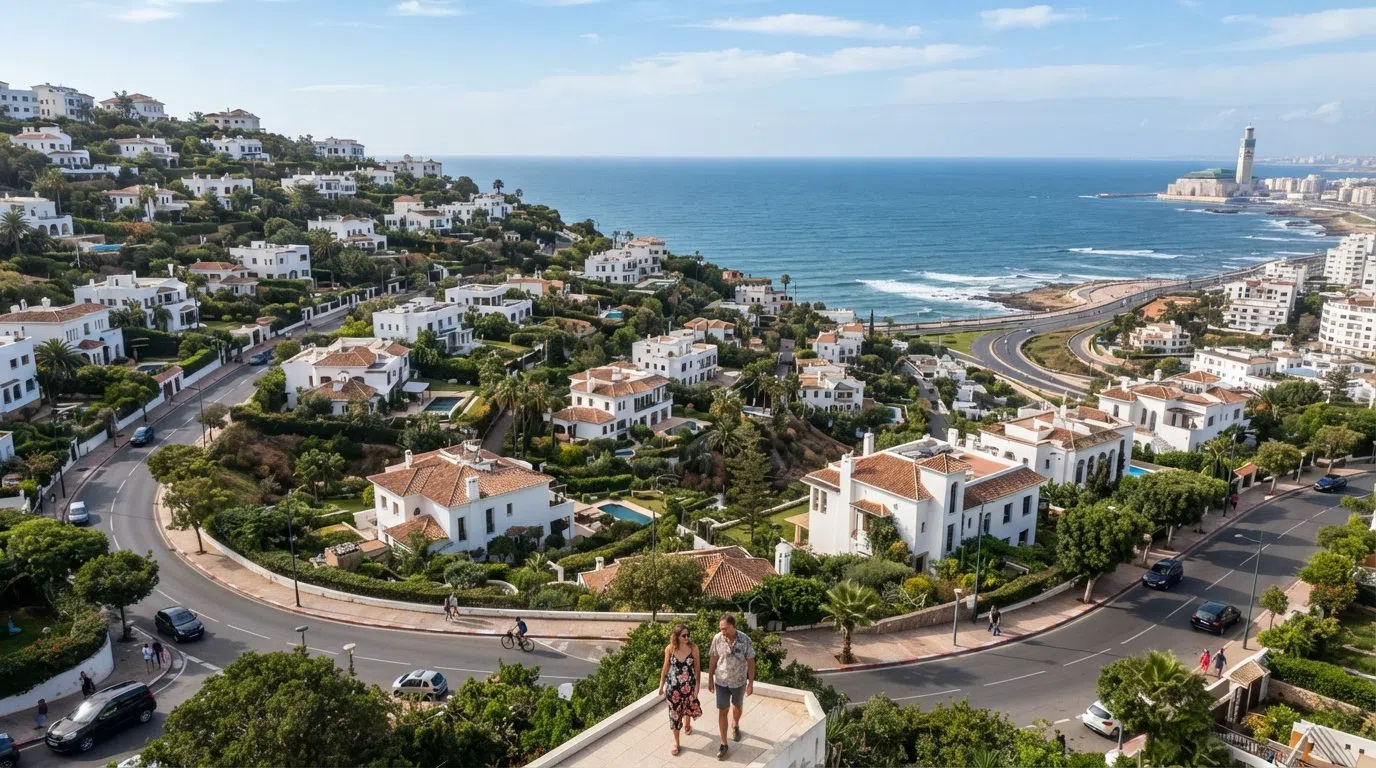
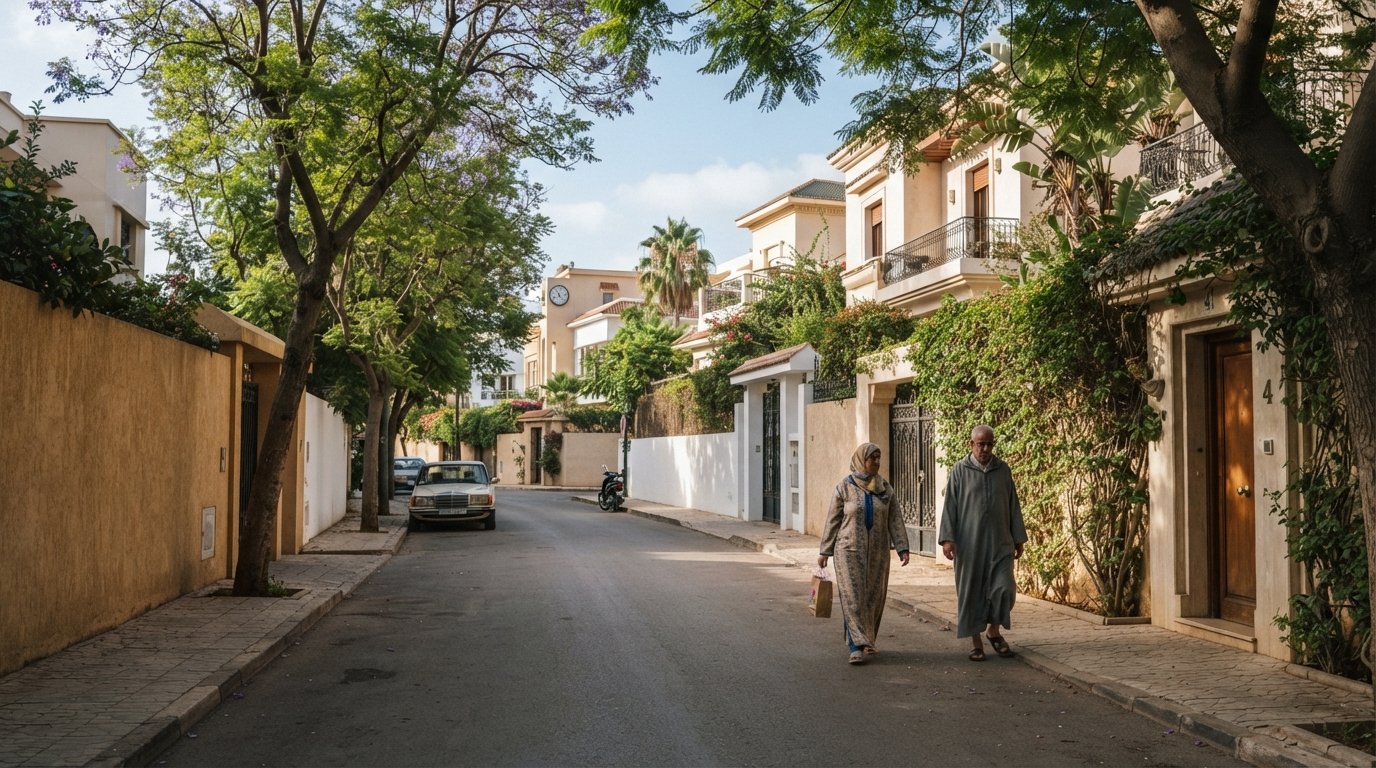
Anfa is the hill Casablanca was named for, and that old fact still feels alive when you stand on its higher streets and look down toward the city’s harder, busier centre. This is where Casablanca keeps its hush. Villas sit behind tall walls, jacaranda shade spills over the pavements, and the soundtrack is more birdsong and the call to prayer than café chatter or motorbikes. It is a neighbourhood that prefers distance to display, even as it holds some of the city’s most important addresses: the old Anfa Hotel site where Roosevelt and Churchill met in 1943, the modernist houses that architecture students still come to study, and the new financial district rising over the former airport runway.
Anfa is Casablanca before Casablanca became the grid below. The Berber settlement that gave the city its name sat on this hill for centuries, a trading post with a long memory and a strategic view, before the Portuguese destroyed it and the French remade the city further down the slope. That layered history is part of Anfa’s character now: you feel it in the old prestige of the place, in the embassy residences and the record-breaking villas, and in the way the district still reads as an address rather than a destination.
The most famous political chapter came in 1943, when the Anfa Conference brought Roosevelt and Churchill here to plan the Allied strategy for the war and demand the Axis’s unconditional surrender. They stayed at the old Anfa Hotel, with the surrounding villas serving as their temporary world. It is the sort of fact that can sound abstract until you stand in the neighbourhood and notice how much of Anfa is built around discretion, security and space. History here did not arrive as a monument; it settled into the street pattern.
Today, the district’s identity is split between old money and new ambition. Anfa is where Casablanca keeps its wealth, and the villas prove it. It is also where the city is building its future, on the former Casa-Anfa airport site now transformed into Casablanca Finance City, with the 136-metre CFC Tower and the wide sweep of Anfa Park laid over the old runway. The result is a neighbourhood that feels unusually composed for Casablanca: residential first, business second, and everything else pushed to the edges.
Walk it from the lower slopes upward and the mood changes subtly. The higher you go into Anfa Supérieur, the wider the streets get and the taller the walls become. Behind them sit the modernist villas that made the district famous with architecture lovers, including Jean-François Zevaco’s low-slung Villa Zevaco. These are not showy houses; they are precise, experimental, and deeply of their time, which is exactly why they still draw pilgrims. Anfa does not advertise itself loudly. It lets its form do the work.
Live prices from our booking partners.
Free cancellation on many rooms. We may earn a commission when you book.
Anfa is not the neighbourhood for improvisation at the curb or for the casual energy of a street-food district. There are no medina grills here, no all-night strip of cheap tables. Eating in Anfa is more composed, more deliberate, and usually more expensive. The places that matter are the ones residents actually return to: polished dining rooms, hotel restaurants, and the occasional garden setting that feels like an escape from the city rather than a performance of it.
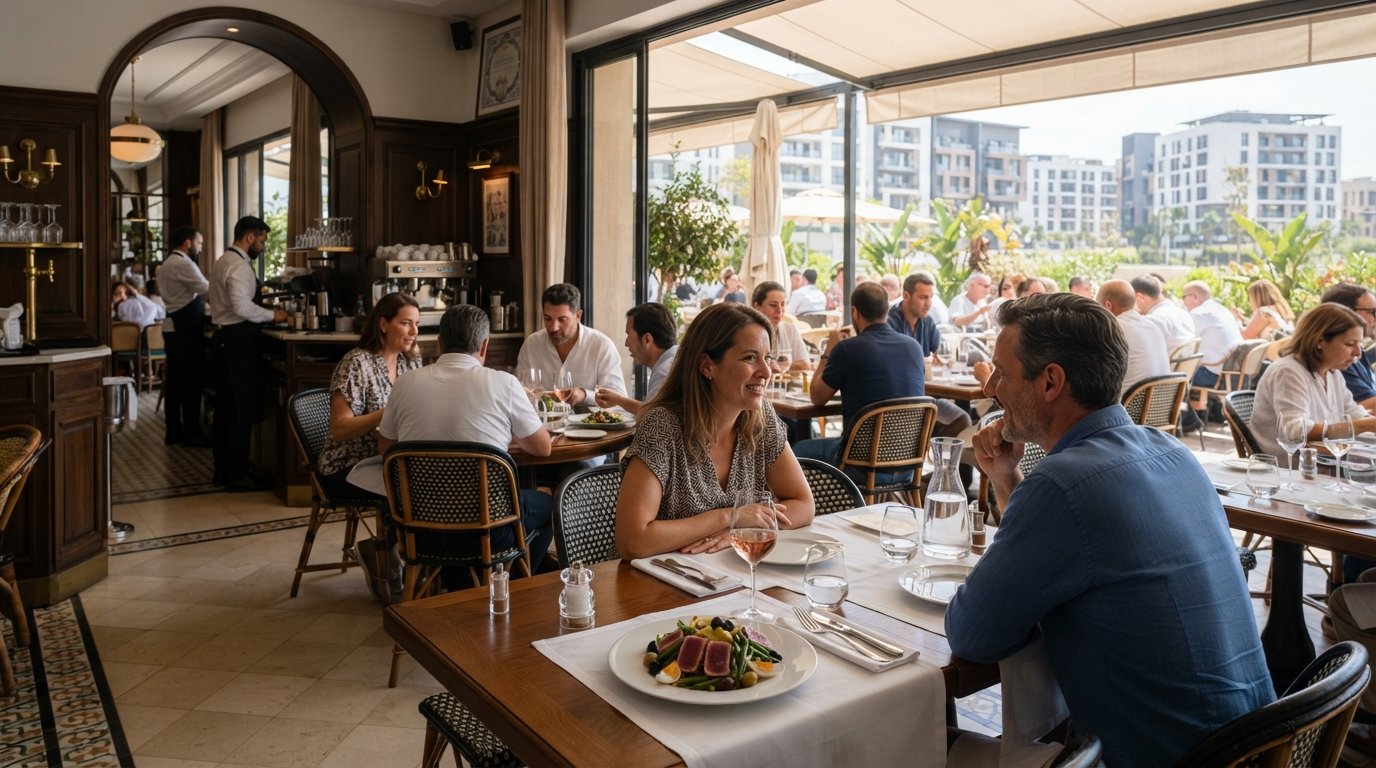
The clearest example is La Table du Marché Casa Anfa, on the angle of Boulevard Driss Slaoui and Boulevard de Bourgogne. It is the Casablanca outpost of the French market-brasserie brand, and it wears that identity well: smart, produce-driven, and suited to the kind of lunch that stretches into an afternoon or the dinner that needs to feel polished without becoming stiff. The room is handsome, there is a terrace, and the easy parking matters in a district where convenience is part of the luxury. You come here for a business lunch or a special-occasion meal and pay properly for the postcode.
For something more rooted in Casablanca’s own culinary rhythm, Dalia Rick’s on Rue Jaber, just off Boulevard d’Anfa near the Beth-El temple, is the place to remember. It serves Moroccan and Mediterranean cooking in a leafy garden setting, and the menu reads like a hospitable summary of what people here actually want to eat: fish-ball tagine, brochettes, pastilla, well-dressed salads. It is open all day from morning until 11pm, which makes it unusually useful in a neighbourhood that is otherwise more about lunch than lingering. The warm reviews for both the food and the welcome make sense. In a district so often defined by gates and distance, a generous table matters.
Beyond that, Anfa’s smartest meals are often tucked inside its hotels, which says a lot about the neighbourhood’s rhythms. Even the casual options are more polished than spontaneous. At the western edge, the Anfaplace development adds cafés and easy stops facing the Atlantic, including a Paul bakery where coffee and pastries feel tailored to the promenade rather than the rush of the city. It is the kind of place you use before a beach walk or after a morning on the coast, not a place that tries to become the centre of your evening.
What makes Anfa worth your time is not a checklist of attractions so much as the way its spaces change the pace of a day. Start with Anfa Park, the first phase of a much larger metropolitan park laid out over the former Casa-Anfa airport runway inside Casablanca Finance City. It opened to the public in 2020 and is free, with shaded paths, rose gardens, fountains, playgrounds and outdoor fitness kit. The park is open daily from around 6am to 9pm, and it is at its best early, when the air is still soft and the CFC towers rise overhead like a reminder that this is a district constantly rewriting itself.
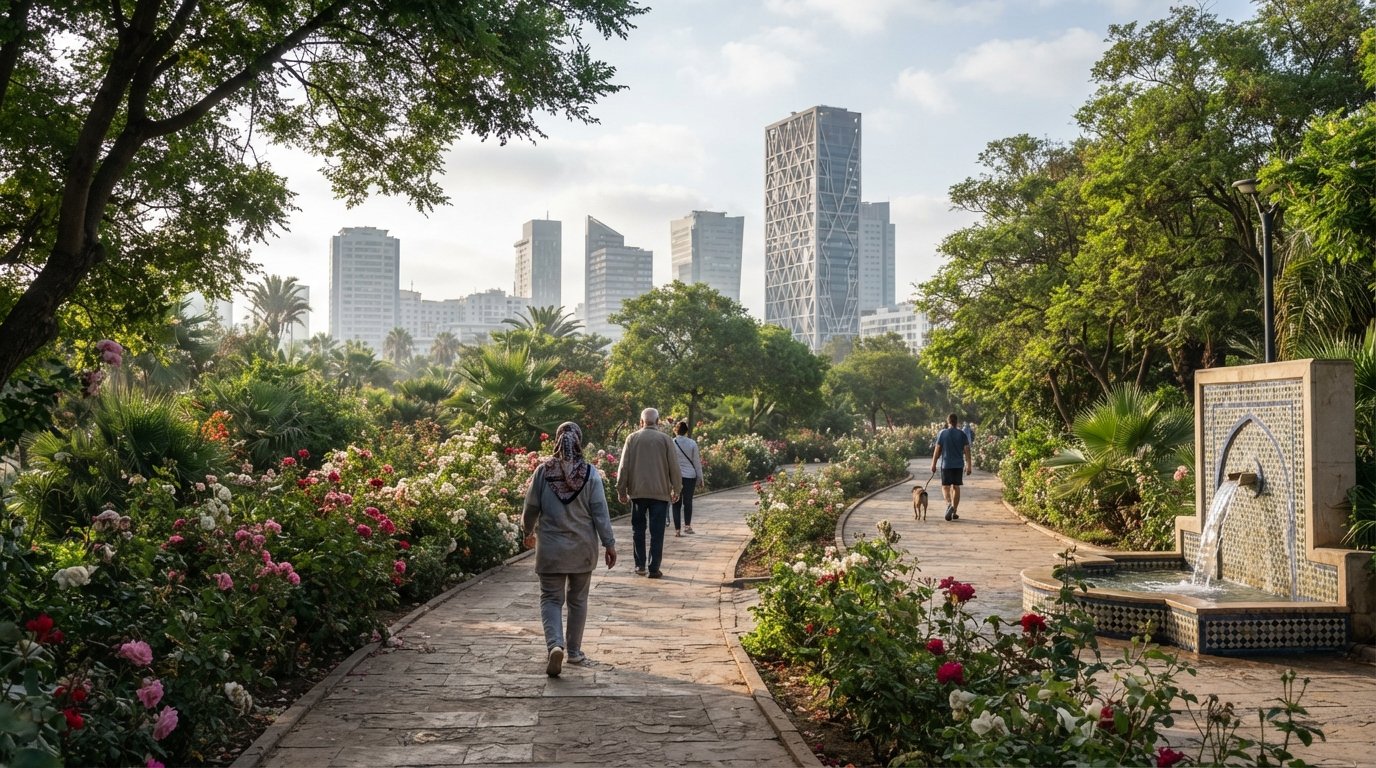
There is something quietly satisfying about walking a park built on an airport runway. You feel the scale of the transformation under your feet. Anfa Park is not dramatic in the way a grand civic garden can be; it is better than that, because it is lived in. Runners pass, children use the play areas, office workers cut through on their way to work. The old airfield has become a place to breathe.
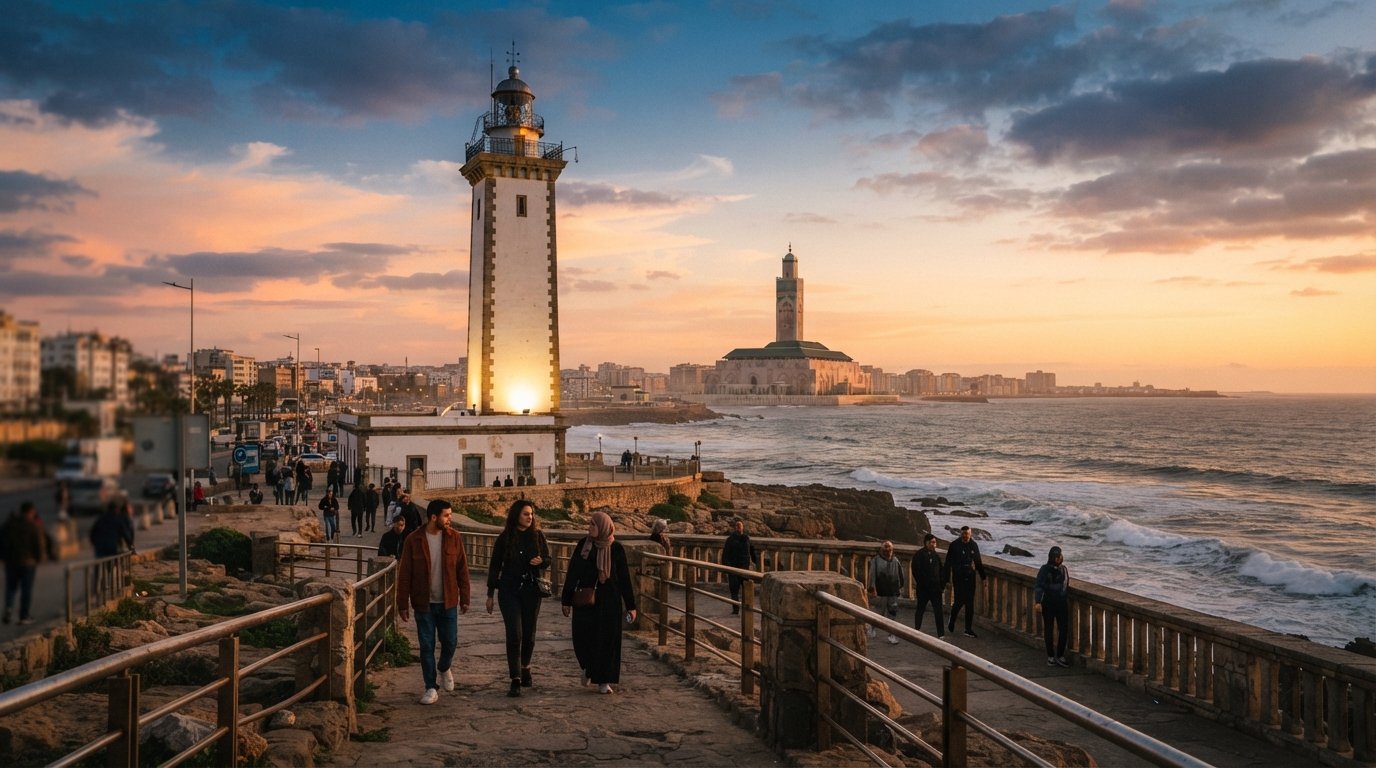
From there, if you want the coast and a broader horizon, head to the El Hank Lighthouse. Built from 1916 and lit in 1920, it is the tallest lighthouse in Morocco at 51 metres, and if it is open you can climb its 256 steps for a sweeping view back over the city and along the coast toward the Hassan II Mosque. The best light comes about half an hour before sunset, when the Atlantic begins to darken and the city’s edges soften. It is one of those views that explains Casablanca better than a map does: the sea, the built city, the modern skyline, and the old neighbourhoods all pressing against one another.
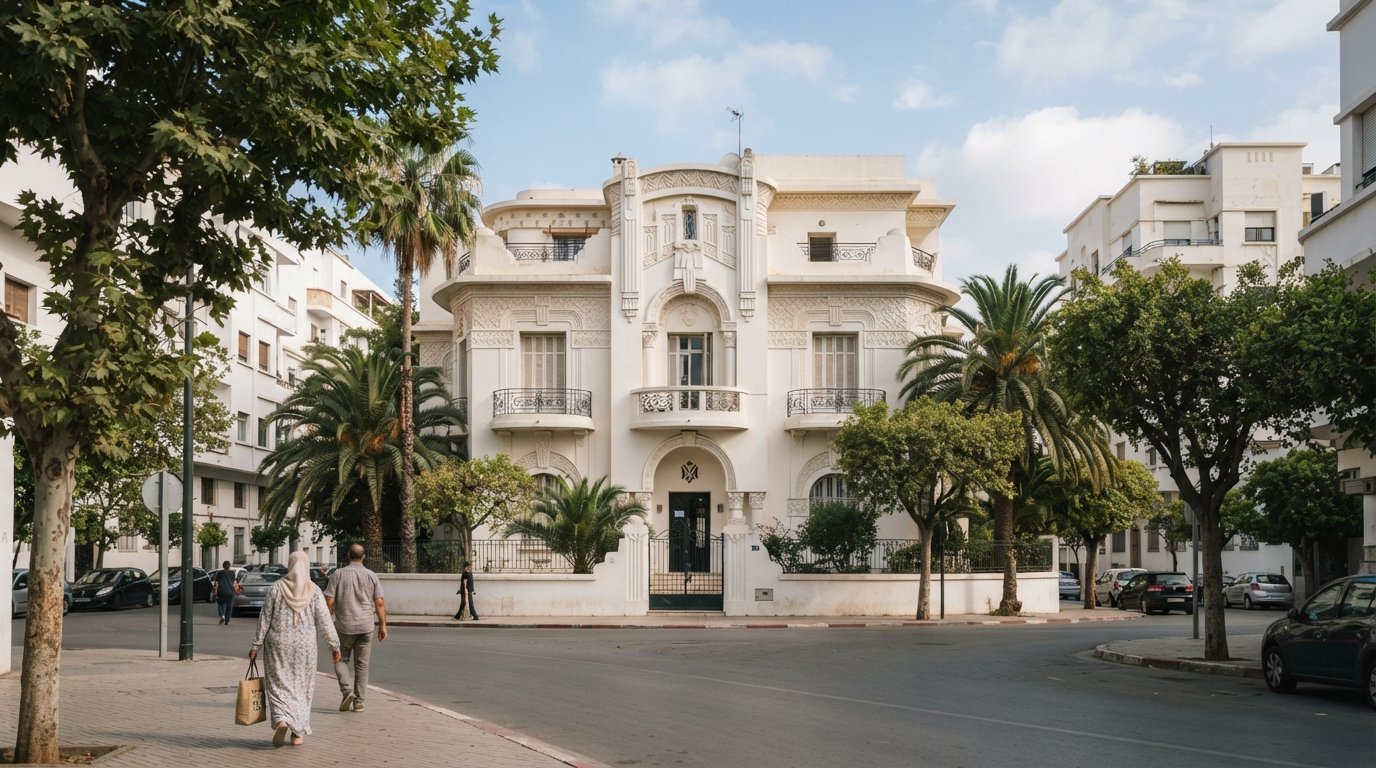
Architecture is the other reason to come to Anfa, and the district rewards anyone willing to look closely. The experimental mid-century villas are the real treasure, with Villa Zevaco the celebrated name in the cluster. These houses are part of Casablanca’s modernist legacy, and they sit in a neighbourhood that still feels, in many ways, like the city’s most protected laboratory of domestic design. Just at the inland edge, near the Arab League Park, the Villa des Arts de Casablanca occupies a restored 1934 Art Deco mansion on Boulevard Brahim Roudani and runs free contemporary-art exhibitions. It is a useful counterpoint to the villas: a place where old architecture is kept alive by new work.
For sport, there is the historic Royal Golf Anfa, a nine-hole course sharing its land with the century-old Anfa racecourse in the middle of the residential district. Even if you do not play, the presence of the course tells you something about the neighbourhood’s scale and inheritance. Anfa has room for a golf course and a racecourse because it was always built for a different kind of city life — one with time, space and a certain expectation of privacy.
Anfa Hill views
The exclusive Royal Golf d'Anfa
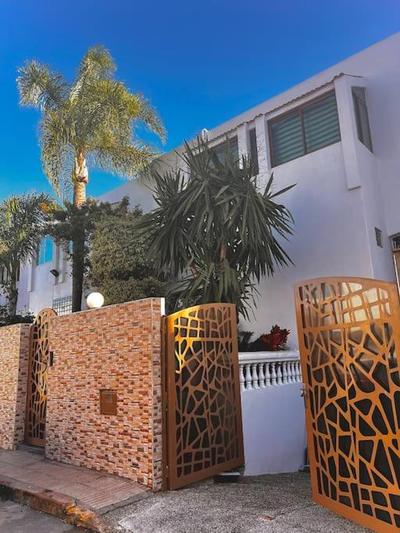
Modernist residential architecture
Anfa is not where you come to browse a medina souk or hunt for bargains. For that, Casablanca sends you elsewhere, toward Habous or the Maârif streets. What Anfa offers instead is a cleaner, more modern kind of retail: the seafront Anfaplace shopping centre at the western edge of the neighbourhood, on the Ain Diab corniche.
Designed by Foster + Partners and opened in 2013, Anfaplace faces straight onto the Atlantic. It has an elevated promenade that steps down to the beach, roughly 80 international high-street and mid-market stores — H&M, Marks & Spencer, Celio and Charles & Keith among them — plus a food court and seafront cafés. It is more mall than market, yes, but the setting changes the experience. The ocean-facing terrace gives you a reason to linger, and the free access to Lalla Meryem beach below makes it easy to turn shopping into a half-day by the water.
Elsewhere in Anfa proper, shopping is mostly a matter of the smart boutiques and delis scattered along Boulevard d’Anfa and the residential side streets. These are places that serve a well-heeled local clientele rather than tourists, which is another way of saying that the neighbourhood does not need to perform for visitors. It is already being itself.
Anfa is where Casablanca puts its business and upmarket hotels, and the logic is easy to understand once you have spent a day here. It is calm, well connected, and close enough to the finance district to make work feel efficient without sacrificing the sense of retreat. The five-star Barceló Anfa Casablanca is the polished modern choice, with an Art Deco-nodding design, spa and rooftop, and a location walkable to the finance-district offices. Idou Anfa has long been one of the district’s dependable business hotels, with a hammam and spa, close to the United Nations Square end of Boulevard d’Anfa. Club Val d’Anfa sits higher up toward the coast for a quieter, greener base, while the eco-certified Mövenpick Hotel Casablanca covers the family-friendly five-star bracket nearby.
Which pocket suits you depends on what you want from the city. Around Boulevard d’Anfa and the CFC end, you are close to offices and a short taxi from Gauthier’s restaurants, which makes sense for business travellers and for first-time visitors who still want to get around easily. Up in Anfa Supérieur near the golf course, the mood is calmer, greener and more residential, better for a slow stay. Toward the western coast and Anfaplace, you trade centrality for sea air and the beach on your doorstep. However you choose, expect this to be the priciest part of Casablanca to sleep in.
Our best-rated stays in this neighbourhood. Prices are approximate “from” rates — confirmed at the provider when you continue. We may earn a commission if you book through our partners — at no extra cost to you.
Anfa is spread out and car-dependent, and that is part of its identity. This is the part of Casablanca where you genuinely rely on taxis. The small red petits taxis are cheap and everywhere; insist on the meter or agree a fare first. Ride-hailing apps work well too, and they remove some of the friction that can otherwise come with moving around a city as large and layered as Casablanca.
The neighbourhood is not on the tramway itself, though the network’s western branches run close to its inland and southern edges, which gives you a cheap, traffic-free link to the centre. The nearest mainline station is Casa-Port, down by the port and the old medina, where trains run to Rabat and beyond, including the fast Al Boraq route. In practical terms, you are looking at about 10–15 minutes by taxi to Gauthier and the centre-ville dining and Art Deco core, a similar hop down to the Ain Diab corniche and the Hassan II Mosque, and roughly 30–40 minutes to Mohammed V International Airport depending on traffic.
Within Anfa itself, the villa streets are pleasant to walk, but the distances between things are real, so it makes sense to combine strolling with short taxi rides. That is part of the neighbourhood’s rhythm: you move between quiet pockets, not through a single continuous scene. Anfa is not a place to conquer on foot in one sweep. It is a place to drift through carefully, then let a taxi take you back to the noise when you are ready for it.
Gallery
Yes, if you value calm, comfort and safety over being in the middle of the action. Anfa is Casablanca’s smartest residential district, with parks, the coast and the finance district close by. The trade-off is that it is spread out, so you’ll taxi to most restaurants and nightlife in Gauthier or on the corniche, about 10–15 minutes away.
Very. Anfa is one of Casablanca’s safest and most desirable districts: leafy, well-kept and heavily residential, with private security common outside the villas. Use the usual big-city common sense after dark, but there is nothing about the area that should worry a visitor.
The neighbourhood’s own draws are its green and coastal edges: Anfa Park on the old airport runway, El Hank Lighthouse for its climbable tower and coastal views, and Anfaplace for beach access and a seafront stroll. Architecture fans come for the mid-century villas and the nearby Villa des Arts, and golfers have the historic nine-hole Royal Golf Anfa.
Mostly by taxi. Anfa is spread out and car-dependent, though petits taxis and ride-hailing apps are easy to use. The tramway runs near the inland and southern edges, and Casa-Port is the nearest mainline rail station.