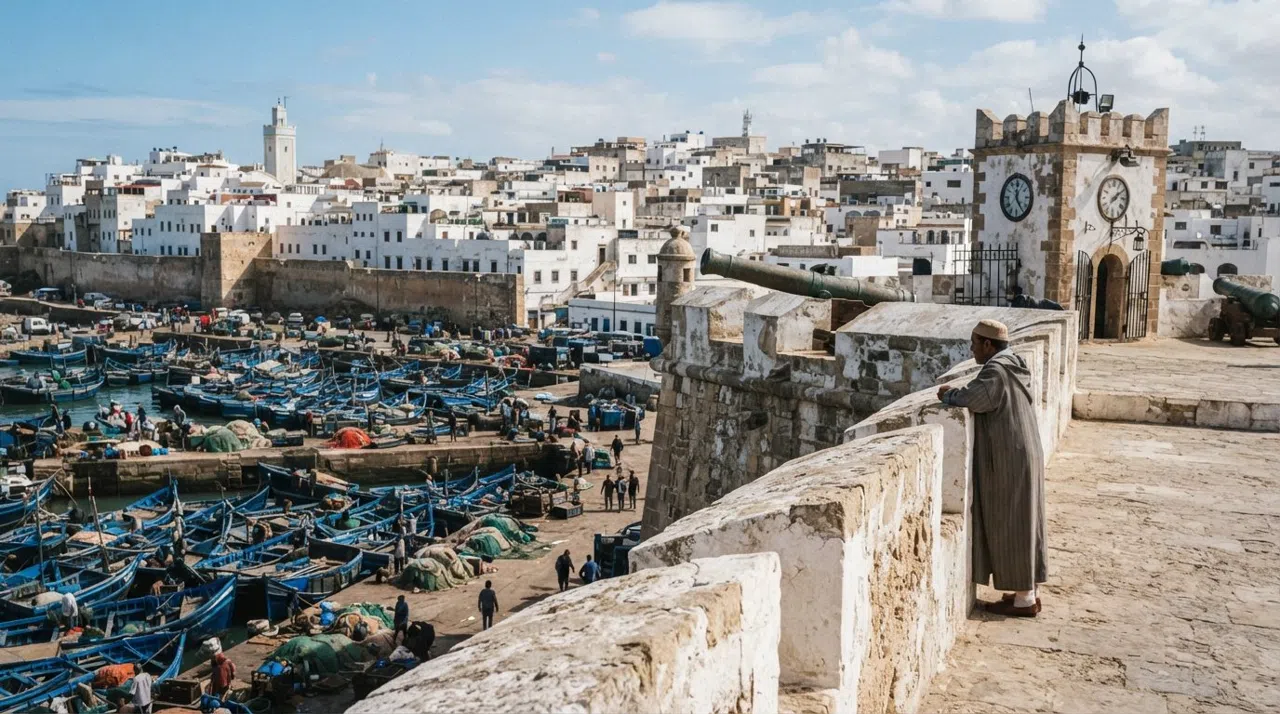
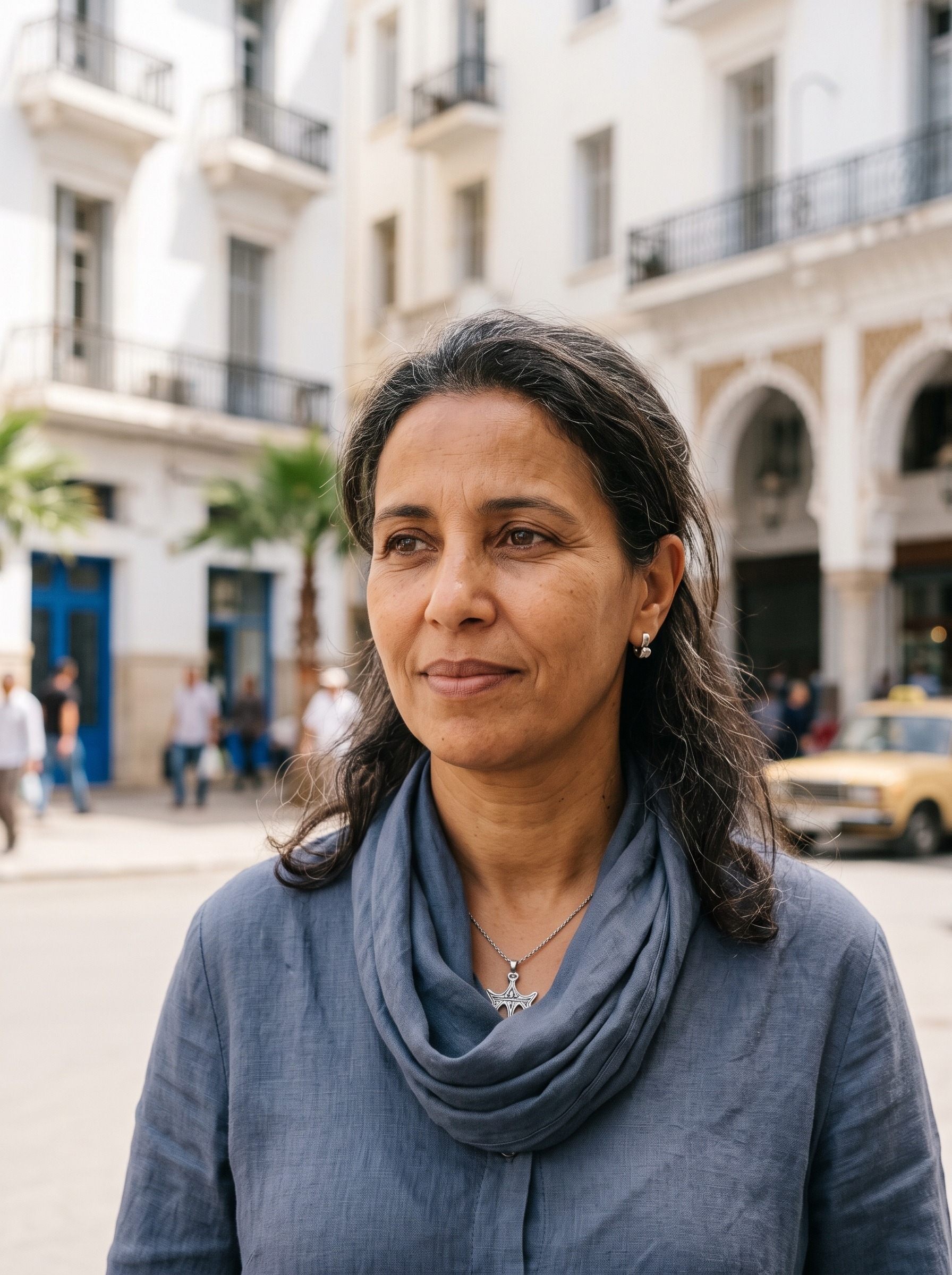
Casablanca’s oldest quarter begins where the city gets a little rougher around the edges and a little truer to itself: whitewashed lanes, port wind, hand-carts, and the old walls holding their ground between the container harbour and downtown. This is not the Morocco of polished fantasy. It is the city’s origin story still open for business, and if you come in daylight, with patience, it will show you Casablanca before the boulevards, before the towers, before the business-city cliché had a chance to flatten it.
What the Ancienne Medina is known for
The first thing to understand is that the Ancienne Medina is not a relic preserved under glass. It is the low, compact heart of the Casablanca that Sultan Sidi Mohammed Ben Abdallah rebuilt in the second half of the 18th century, when this walled quarter was the town and everything beyond it was future city. The walls still matter. The medina still reads as a boundary, a hinge, a stubborn old pocket of life wedged between the Atlantic edge and the French-era grid.
What gives the quarter its character is precisely what it does not offer. There are no grand riads waiting to be photographed from a balcony. There is no parade of carpet touts, no theatrical heritage lane, no inherited prettiness. Instead you get hardware stalls, butcher’s counters, cheap shoes, phone cases, mint tea, and people who are simply getting on with the day. The soundscape is wonderfully uncurated: carts rattling over cobbles, vendors calling prices, the muezzin from Ould el-Hamra cutting through the market noise, and, from the port side, a salt wind that keeps reminding you how close the sea is.
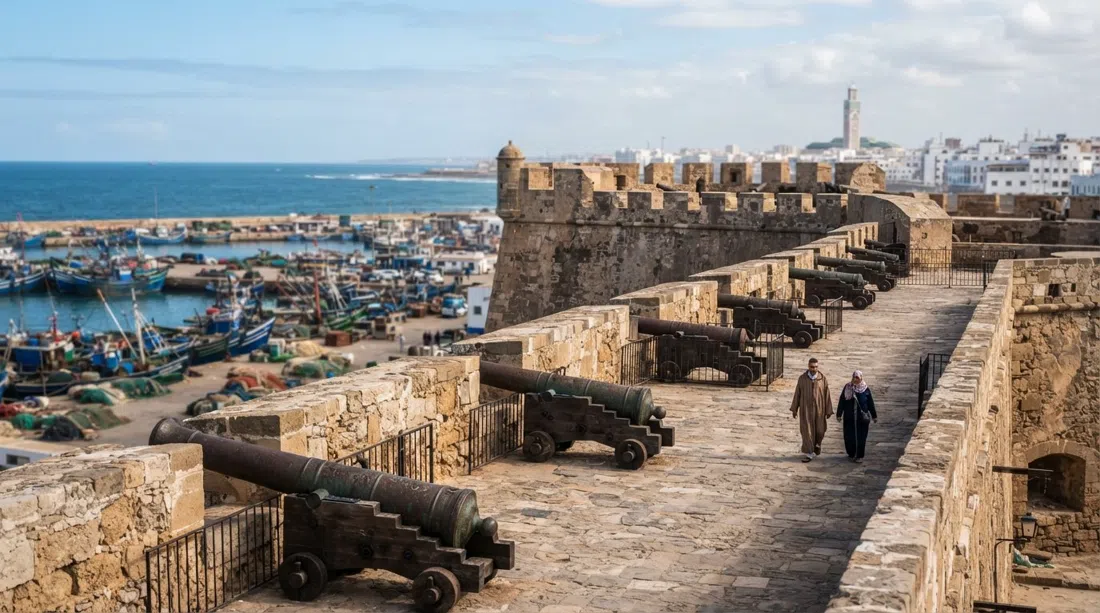
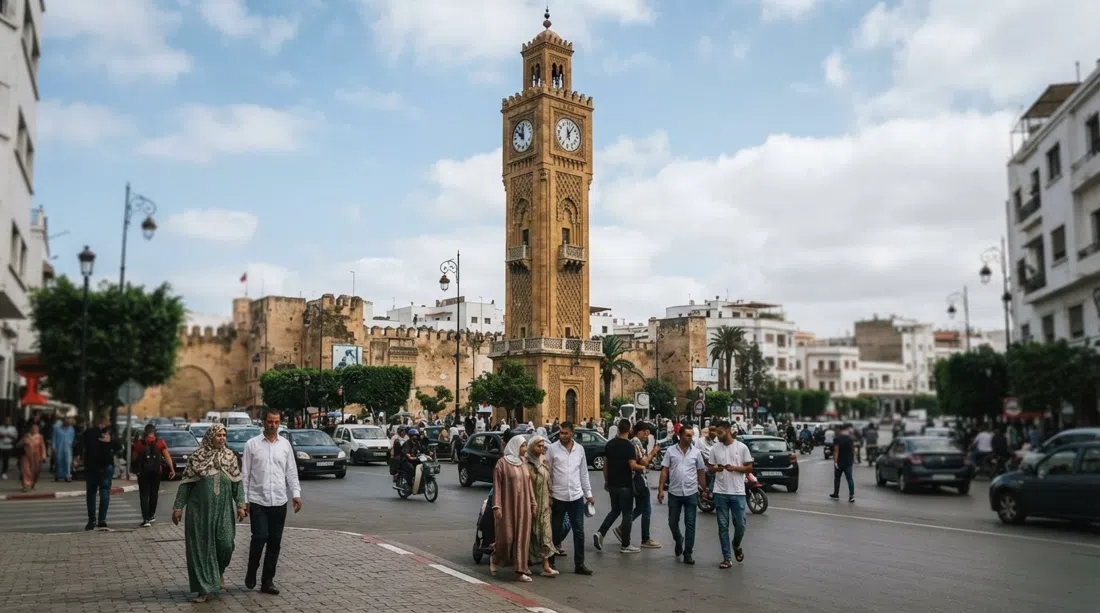
The quarter’s landmarks are few, but they are eloquent. The Sqala bastion still points its cannons at the Atlantic. The Ould el-Hamra mosque remains the oldest mosque in the medina. The Koubba of Sidi Belyout marks the edge with the white dome of the city’s patron saint. And at the city line, United Nations Square and its rebuilt clock tower make the border between old medina and Ville Nouvelle visible in the most Casablanca way possible: not with ceremony, but with traffic, tramlines and a little architectural theatre.
If you arrive from Fes or Marrakech expecting a miniature version of either, the Ancienne Medina can feel almost disarming. It is smaller, plainer, and in places scruffier than you might have imagined. But that is the point. Casablanca has never been a city that performs its history neatly. Here, history is folded into the daily errand: a sack of vegetables, a fish purchase, a prayer, a repair, a tea break, a cross-current of languages around the Marché du Sénégal. The medina’s honesty is its charm.
Where to eat & drink
Eating here is best understood as a choice between spectacle and plain truth, and the good news is that both sit very close to the same walls. La Sqala is the obvious romantic stop, though romance here comes with cannons and orange trees rather than candlelight. Built into the 1769 bastion itself on Boulevard des Almohades, it has the feel of a garden tucked inside a fortification: tilework, ramparts, a walled courtyard and the Atlantic not far off. It is the place for a long Moroccan breakfast — msemen, beghrir, fresh juices — or for Friday couscous, and it works well all day for tagines and salads when you want to sit still and let the quarter drift around you.
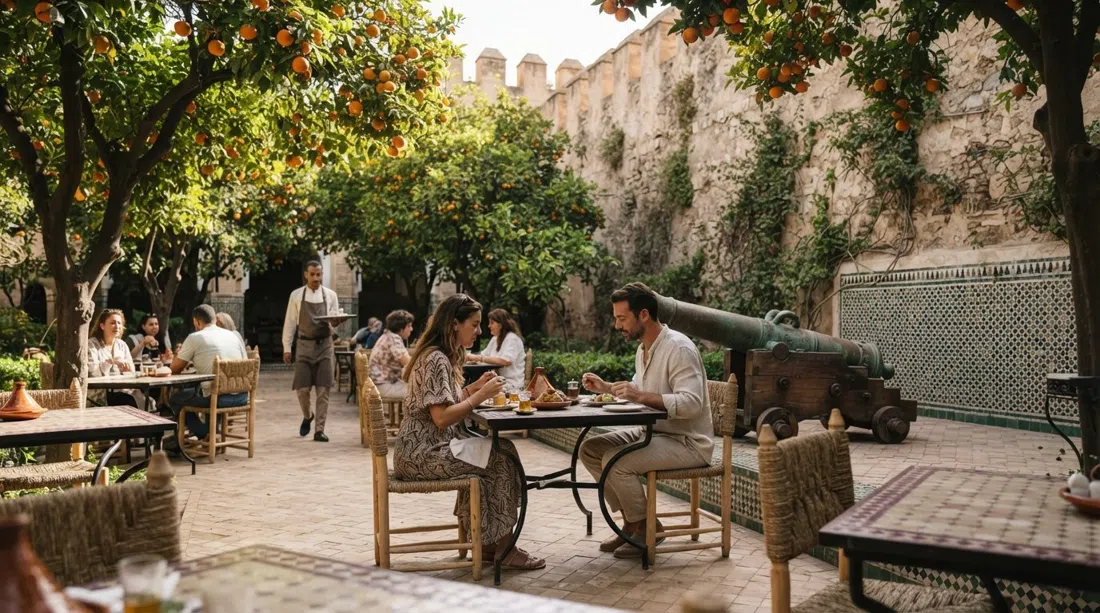
A short walk away, Café Maure at La Sqala gives the same bastion a gentler rhythm. This is the tea-garden side of the place, where mint tea and pastries arrive among the orange trees and the old stonework. It is not a separate world, just a slightly quieter register of the same setting, and a good place to pause if you want the ramparts without a full meal.
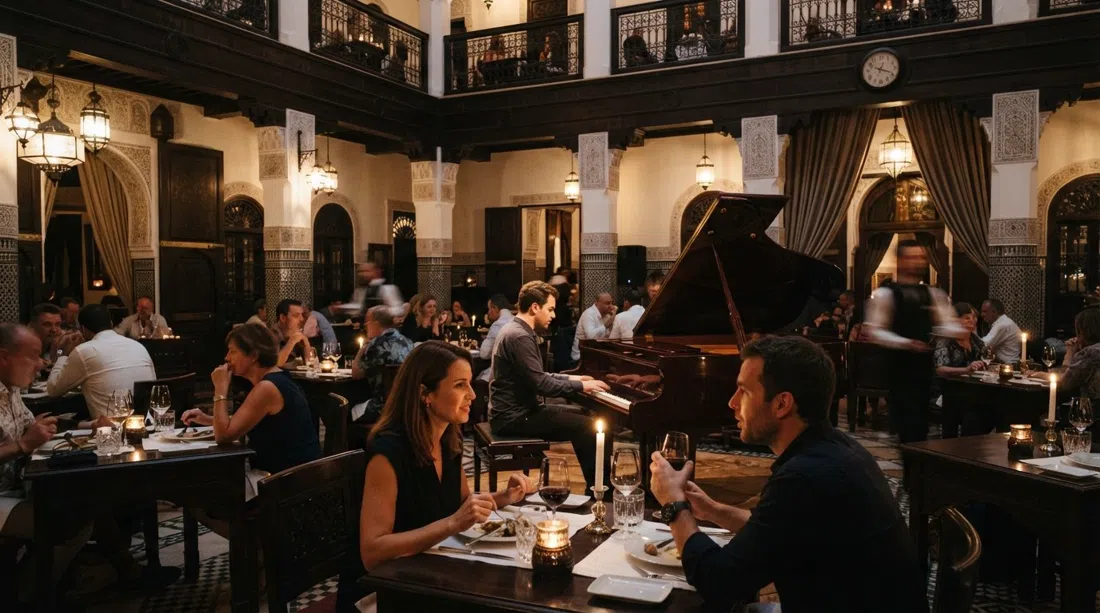
Then there is Rick’s Café, at number 248 against the medina wall on Boulevard Sour Jdid. It is the Casablanca-film fantasy made real in 2004 by former US diplomat Kathy Kriger, and it knows exactly what it is: atmospheric, polished, touristy, and not cheap. Main courses run roughly 190–290 MAD, cocktails start from 100 MAD, and the dinner seatings are at 18:30 and 21:00, so this is a place to book ahead rather than wander into on a whim. Yet the low-lit courtyard, the arches, and the live piano do what they are meant to do. The room is a performance, but a handsome one, and if you are going to indulge Casablanca myth anywhere near the old walls, this is the place.
Inside the medina itself, the eating is less polished and more useful, which is often what a neighbourhood really needs. Grill counters, sandwich stalls, fried-fish spots and mint-tea cafés line the lanes and cater to locals, traders and dock workers. This is where the quarter stops being a destination and becomes a lunch break.
Going out
There is no pretending otherwise: the Ancienne Medina does not go out late. It is a working market, not an evening district, and once the shutters come down the lanes empty fast and the light goes poor. If you want a night out, you go elsewhere — Gauthier for terraces and bars, Ain Diab for the seafront. But if you want to stay within the medina’s orbit after dark, Rick’s Café is the one genuine evening venue, with its piano, cocktails and seated dinners. It is more a destination restaurant with a bar than a neighbourhood haunt, but it does the job.
La Sqala also stretches into the evening and, on weekends, sometimes has a musician on the terrace. That gives the old fort a softer after-hours mood, though still nothing like a late-night scene. Here, going out means dinner, tea, maybe a little music, and then home. Casablanca’s old quarter is not trying to be anything else.
Things to do
The best way to see the Ancienne Medina is slowly, on foot, in the morning before the heat and the crush build. Start at United Nations Square, where the medina meets downtown and the rebuilt Tour de l’Horloge stands as a neat, almost formal reminder of where the old boundary once ran. The original tower went up around 1908 as a symbol of French authority, was pulled down in 1948, and the near-identical replacement dates to 1993. It is a small thing to begin with, but that is Casablanca: the city often tells its story in revisions.
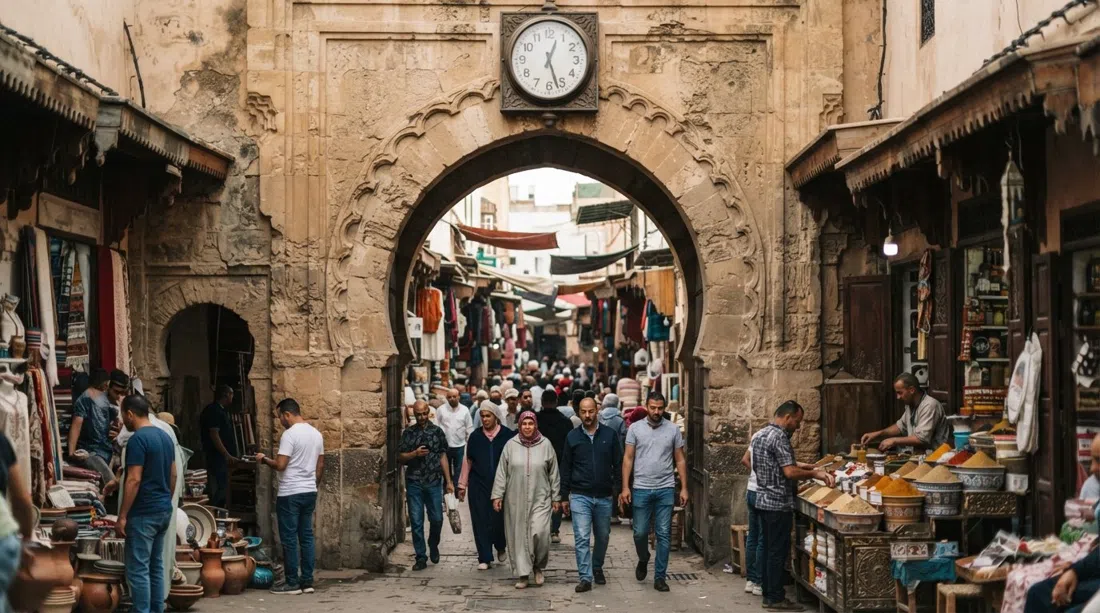
From there, enter through Bab Marrakech, the arched sandstone gate that once faced the road to Marrakech and survived the 1755 earthquake that flattened much of the old town. Just inside, the souk lanes are at their liveliest: narrow, crooked, and full of the kind of commerce that belongs to a living city rather than a heritage display. This is where the medina feels most itself, with shopfronts spilling into one another and the air carrying the mixed smells of dust, fish, oil and tea.
Walk northward toward the port wall and you will reach the Sqala Bastion, the 1769 seafront fort built by Sultan Sidi Mohammed Ben Abdallah. The cannons still line up above the fishing harbour, and the ramparts give you the medina’s best set-piece: stone, sea, port machinery and Atlantic light all in one view. It is the place to pause for photographs, but also to understand the city’s practical imagination. Casablanca was built for trade, defence and movement, and the Sqala makes that plain.
A short detour brings you to the Koubba of Sidi Belyout, the white-domed shrine of the city’s patron saint. The legend of the shepherd and the lion belongs to Casablanca’s deeper folklore, and the koubba gives the medina a devotional note that is easy to miss if you hurry. Nearby, on Boulevard des Almohades, stands the Ould el-Hamra Mosque, first raised in 1789 and the oldest mosque in the quarter. The interior is for worshippers only, but the minaret and doorway are worth a respectful look. It is a modest building, and all the more moving for that.
If you are a photographer, this quarter gives more in texture than in monumentality. The appeal is in faded façades, cats on cannons, the geometry of old walls against new traffic, and the way the port wind roughens everything it touches. It is a place for looking closely rather than ticking off sights.
Shopping & markets
This is a shop-for-life medina, not a shop-for-souvenirs one. The lanes are full of everyday trade: hardware, phone accessories, cheap clothing, shoes, toys, household goods, fruit, vegetables and spices. That is what makes it feel so alive. The commerce is practical first, picturesque second, and you can sense that the quarter is serving its own residents before anyone else.
The more traditional stalls cluster just inside Bab Marrakech, where leather bazaars sell poufs, babouches and bags, and where brass, fabric and pottery appear in pockets between the more ordinary shops. There is haggling here, but it is not a performance for visitors; it is simply how prices are settled. Bargain gently and in good humour, and you will be fine.
On the inland edge toward Avenue des FAR, the Marché du Sénégal adds another layer to the medina’s commercial life. This is a sub-Saharan African market where Senegalese and wider West African traders sell imported rice, palm oil, dried fish, spices, fabrics and street food. It is one of the most distinctive corners of the quarter, and one of the best reminders that Casablanca has always been a city of movement and exchange rather than a sealed-off old world.
If you want polished craft shopping, with neat arcades and famous pastry shops, the Habous quarter across town is the better bet. The Ancienne Medina is rawer, cheaper and more immediate. That is its value.
Where to stay in the Ancienne Medina
Bluntly, most people should not sleep inside the walls. The Ancienne Medina has very few tourist-grade riads or hotels, and the small guesthouses near the edges can be noisy, basic and awkward after dark. The streets dim quickly, and the atmosphere that feels so vivid by day becomes less appealing once the shops close and the lanes empty.
If you insist on staying close, look near the entrances by United Nations Square and the port, where you are within easy reach of the tram, Casa-Port station and the lit boulevards. But for most travellers, the better answer is to base yourself in Centre Ville or in walkable Gauthier and come here as a half-day wander.
The advantage of staying just outside the old walls is simple: you get the medina by day and comfort by night. That is the Casablanca compromise I would recommend without hesitation.
Getting around
The Ancienne Medina is small enough to cross in about fifteen minutes, but do not mistake small for simple. The lanes are narrow, uneven and easy to misread, so it helps to keep the port wall, the clock tower or the sea side in mind as you move. The most obvious entrance is United Nations Square, which sits on tram line T1 and is the cleanest way in and out. It also connects you neatly across the city centre.
Casa-Port railway station is only about a 10-minute walk north of the square, roughly 750 metres away, which makes the medina convenient if you are arriving for a morning wander before a train onward to Rabat or El Jadida. The Hassan II Mosque is a walkable 15 to 20 minutes west along the seafront, or a very short taxi ride. Petits taxis are plentiful on the surrounding boulevards, but they cannot enter the lanes. Mohammed V airport is about 30 to 40 minutes away by taxi or by direct train from Casa-Port or Casa-Voyageurs.
One final thing to note: the seaward side is changing. Ongoing port and cruise-terminal redevelopment, inaugurated through 2025, is gradually reshaping the walk down to the water. Casablanca never stands still for long, even in its oldest quarter. That is part of the fascination. The medina is not preserved in amber; it is still being edited by the city around it.