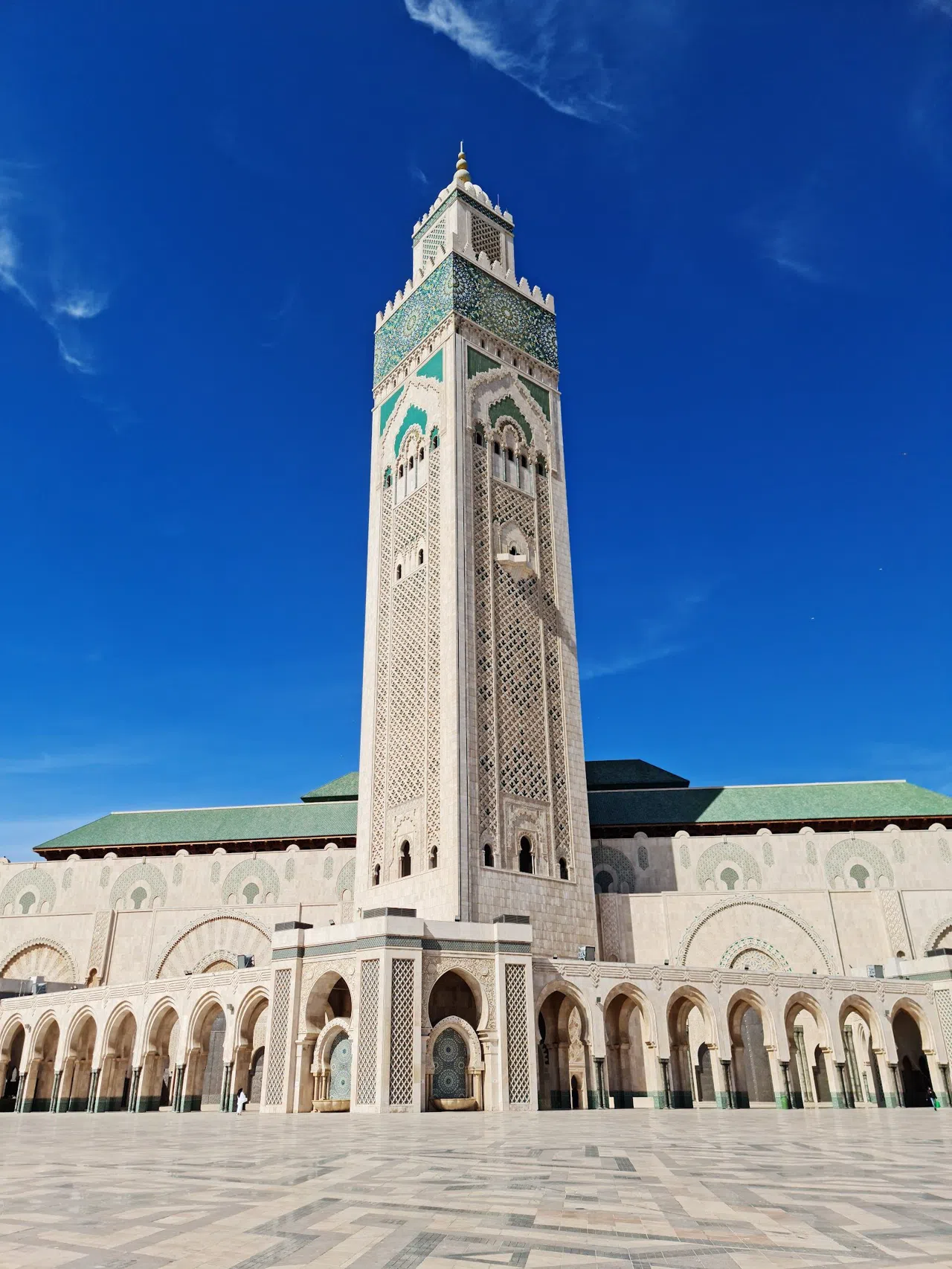
At low tide the Atlantic pulls back far enough along Casablanca's corniche that you can walk out onto the wet rock shelf under the Hassan II Mosque and look straight up at a minaret taller than anything else in the city that isn't trying to be a mosque. Sixty years ago this stretch of coast was just wind, spray and fishing boats. Now it's the single image most visitors carry out of Morocco's biggest city, and the reason the rest of the skyline had to work out what it stood for. This is that story, told through the places built to watch the mosque, dine against it, and stand where the tide its engineers fought is still doing its work.
The mosque and the sea it was built to hold back
Hassan II Mosque, on Boulevard Sidi Mohammed Ben Abdallah on the corniche, sits on land reclaimed right at the ocean's edge on purpose: King Hassan II wanted a mosque where, as the brief put it, God's throne was over the water, and that site meant building a foundation able to survive both an Atlantic swell and Morocco's seismic risk at the same time. What you actually feel walking in is scale first, craft second: a minaret that clears 200 metres, a retractable roof over the main prayer hall, hand-cut cedar and carved plaster done by artisans who trained for years specifically for this one build, and the detail photographs never quite get across (a glass section of floor near the ablutions hall where you can watch the sea move underneath your feet).
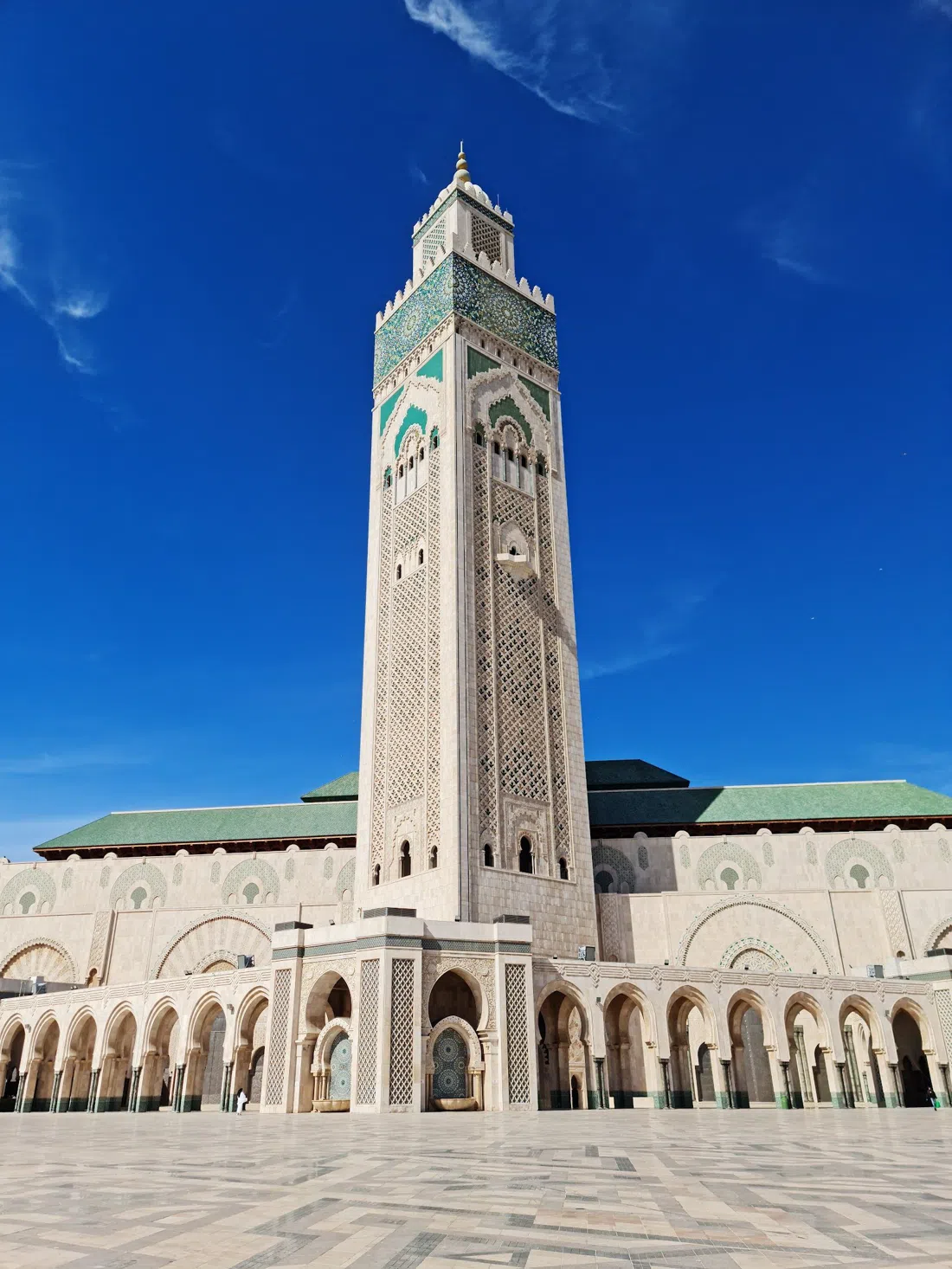
It's open daily 09:00-16:00, and it's genuinely open rather than open with a special permit, but non-Muslim visitors only get in on a scheduled guided tour, 45 to 60 minutes, running several fixed slots a day. Entry for foreign adults is 140 MAD. Large groups are routine here (school trips, cruise-ship coach parties, wedding-planning walkthroughs), and if you're bringing ten or more people it's worth booking the skip-the-line slot rather than queuing with everyone else at the gate. Take the earliest slot you can; the light through the stained glass is better before the midday sun flattens it, and the crowds thin out fast once the coach groups move on to lunch.
Dining against the ramparts
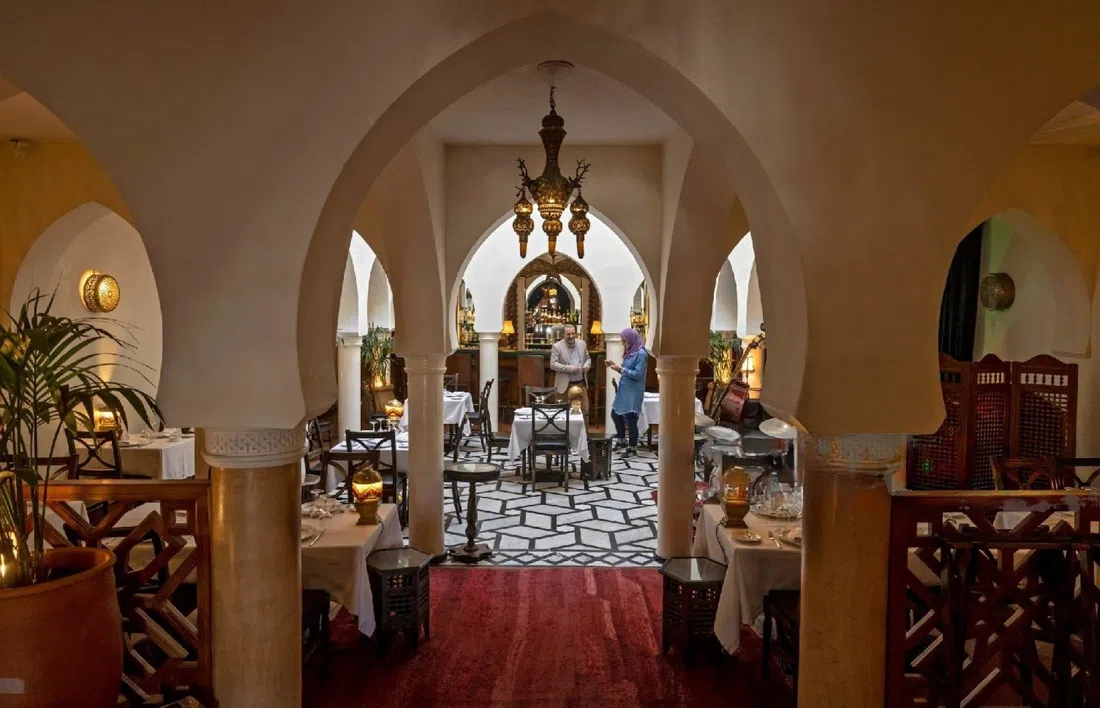
For the clearest before-and-after of this coastline, eat at La Sqala, built into the old Sqala sea-defence ramparts near the medina, a fortification that predates the mosque by two centuries. You end up eating pastilla and grilled fish inside stone walls the city raised to survive the same ocean the mosque's engineers later poured concrete against: it's the most literal old-Casablanca-meets-new-skyline contrast you'll find anywhere in the city. Mains run roughly 100-200 MAD, it's genuinely set up for groups and large terrace parties, and there's live traditional music on weekends, which makes it lively rather than quiet, so ask for a table away from the band if you actually want to talk over dinner.
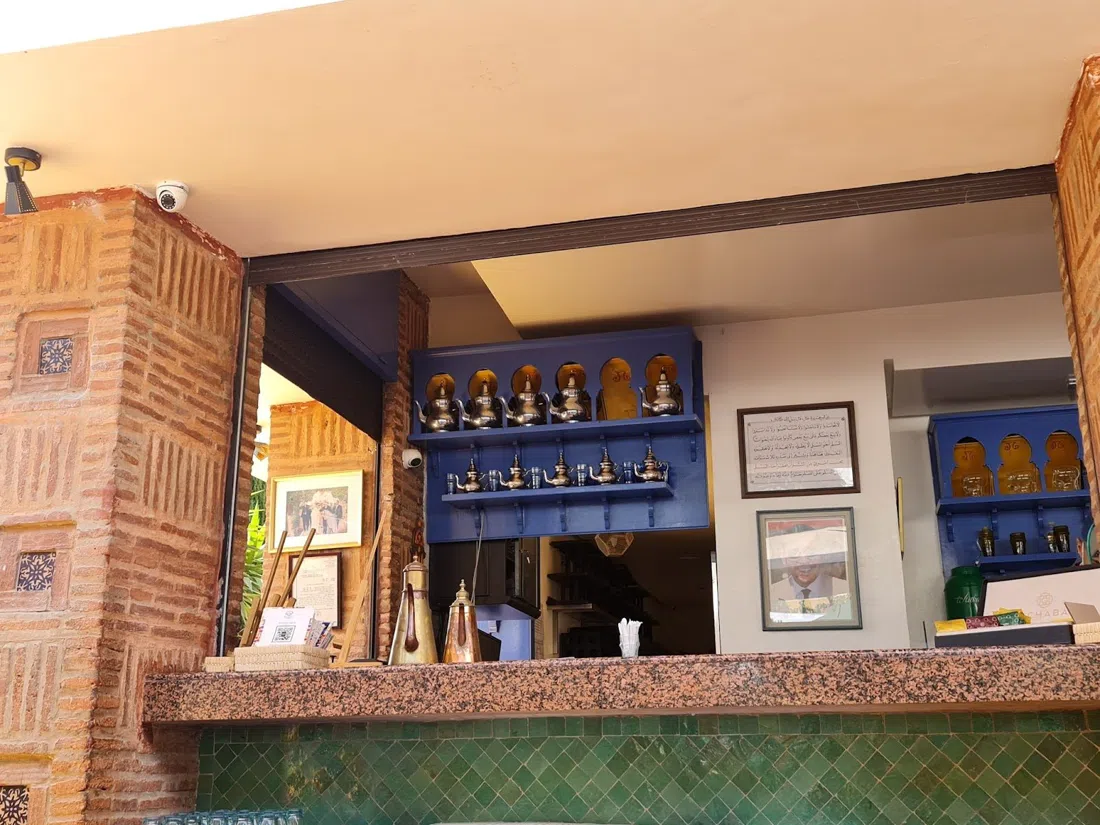
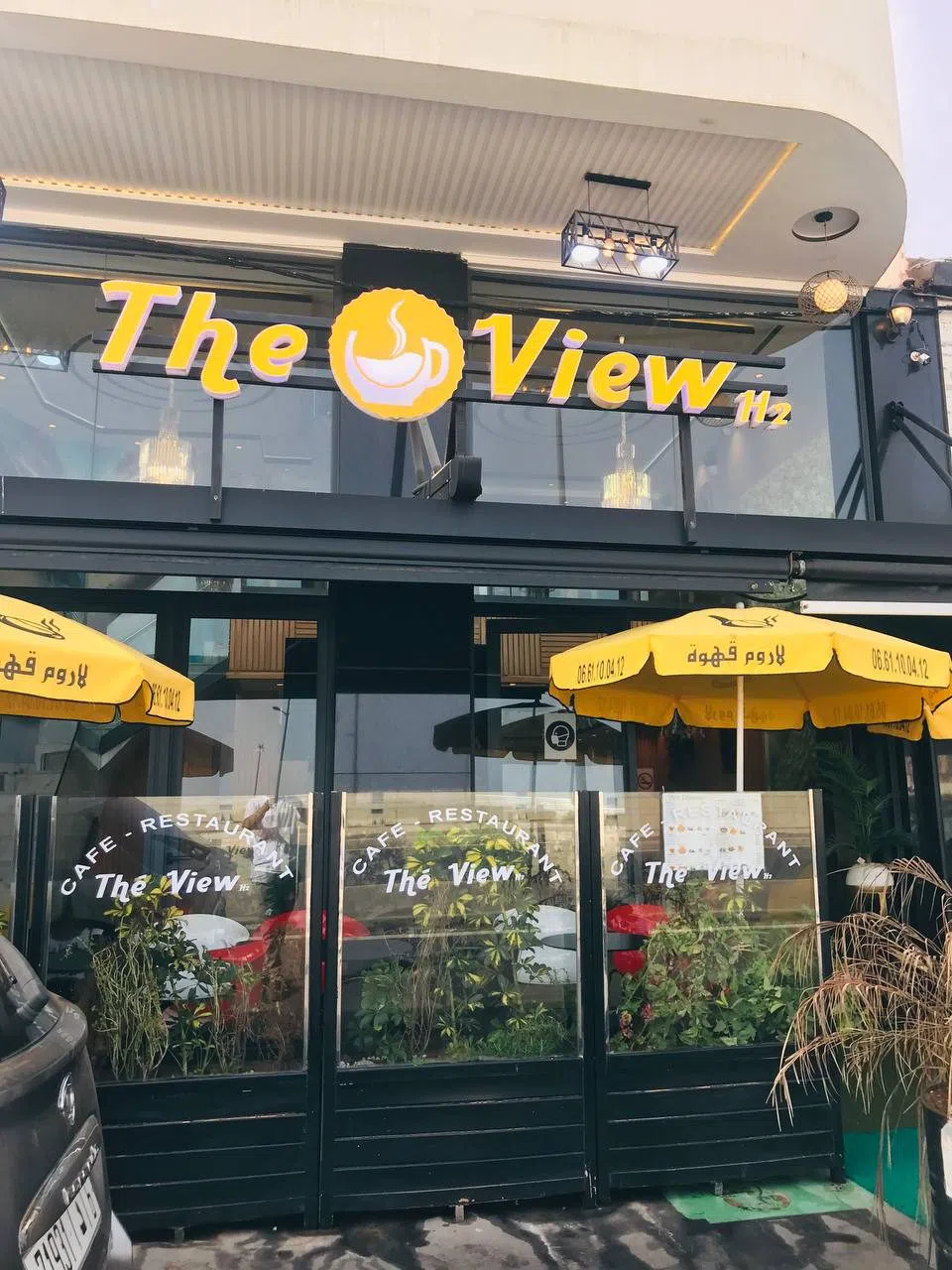
For the view itself rather than the history lesson, THE VIEW H2 on the corniche is the newer, cheaper option, and it was built around exactly one thing: the sightline to the mosque across open water. It's a casual café-restaurant, walk-ins are fine, groups are fine, and the upper floor holds reserved seating if you specifically want the minaret framed while you eat. Mains and coffee run roughly 40-150 MAD, which makes it the best low-cost way to get that shot without paying restaurant prices for the privilege.
The lighthouse and the tide itself
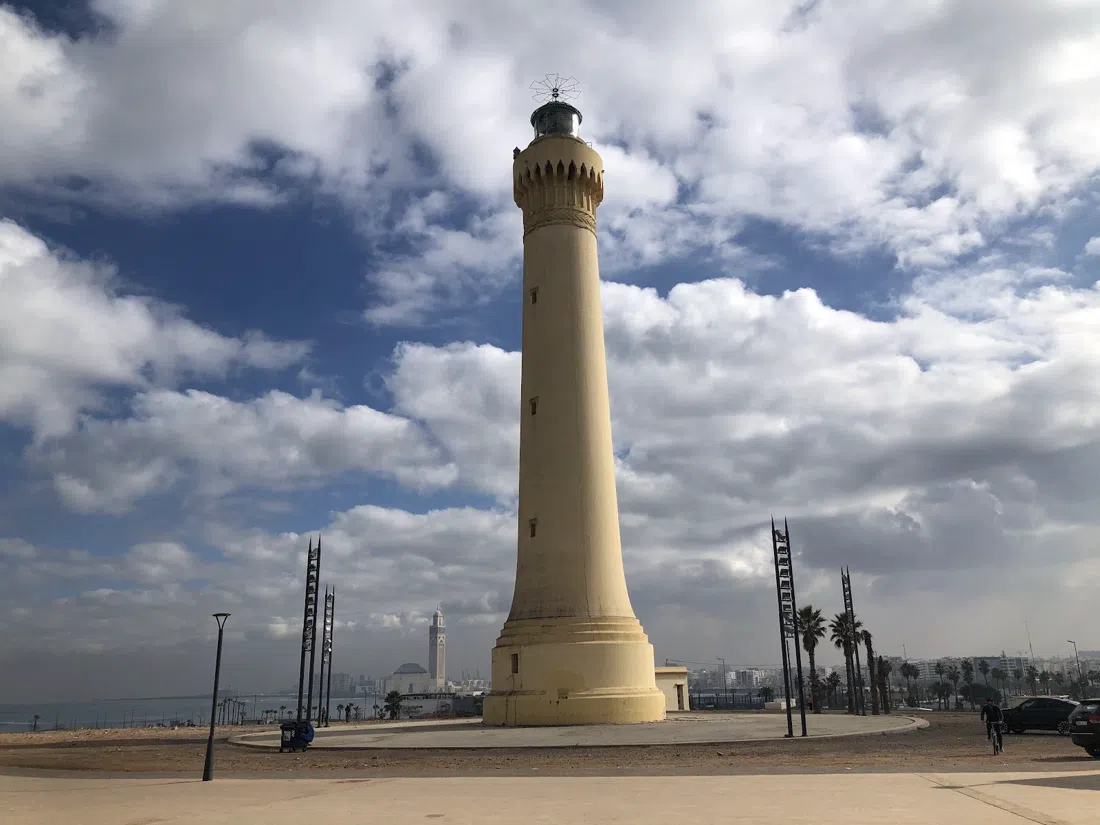
Keep walking the corniche past the mosque and you reach Phare d'El Hank, Morocco's tallest lighthouse and the plainest place in the city to actually see the tidal Atlantic the mosque's foundations were engineered against. It's a free public viewpoint with no booking needed, though interior access is inconsistent enough that you should treat it as a stop on a coastal walk rather than a ticketed visit you've built a whole afternoon around. Go about 30 minutes before sunset: the lighthouse turns gold, the swell is usually more visible on the rocks below, and from that distance you get a clearer read on the mosque's actual scale than you do standing directly under it.
If you want to feel that tide rather than just look at it, Anfa Surf School, based on the Ain Diab corniche, runs group and private lessons with boards and wetsuits included, roughly 150 MAD an hour for a private session. This is genuinely the same water and the same swell pattern the mosque's anti-seismic, anti-tidal foundations were built to withstand, and a mid-tide lesson gives you the clearest sense of why that engineering problem was real and not just decorative ambition.
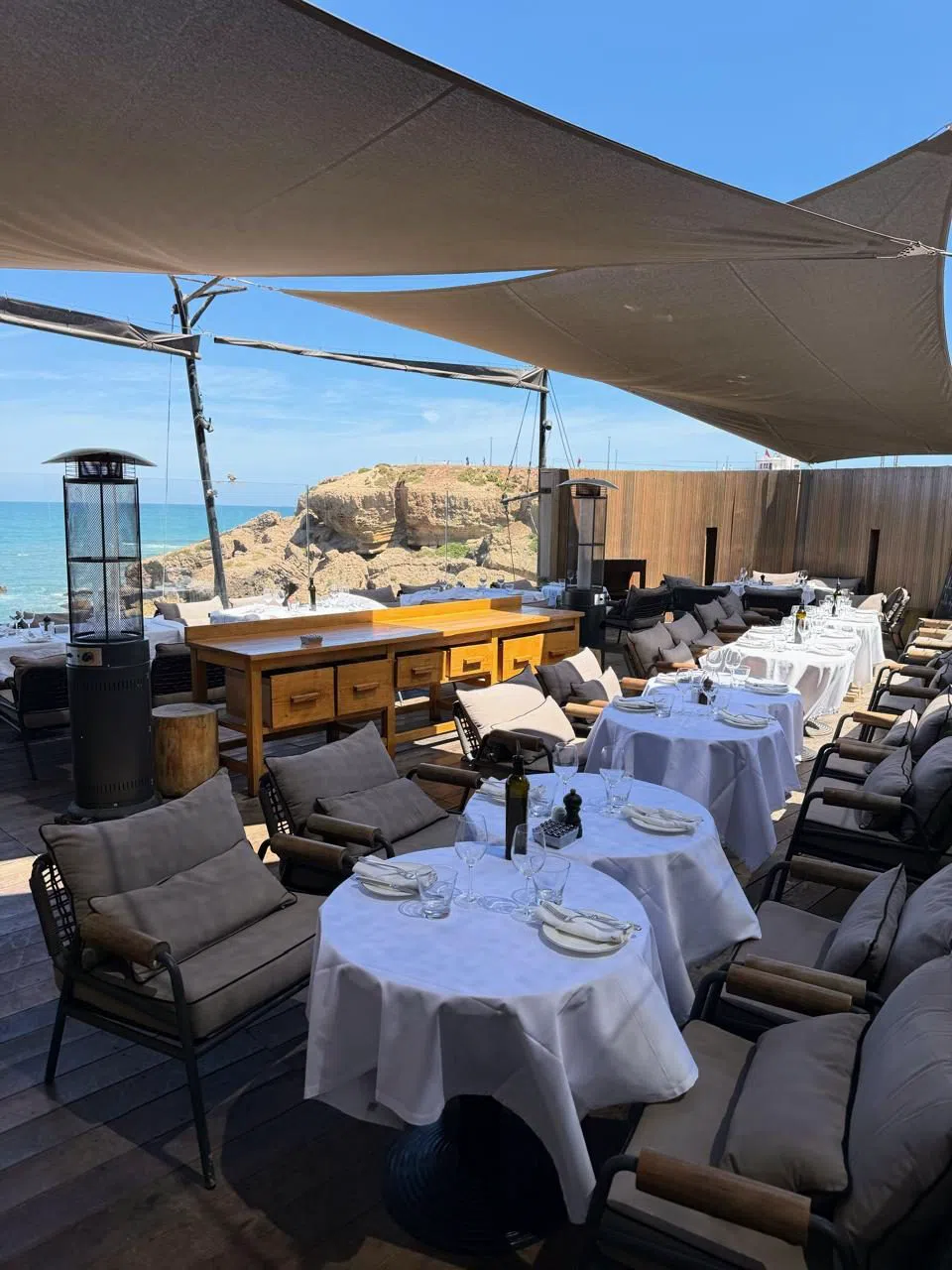
Closer to the lighthouse, Cabestan Ocean View has been Casablanca's reference point for dining on top of the tide line since 1926, decades before anyone had drawn up plans for the mosque. It takes groups and reservations for lively gatherings, and runs a separate tapas bar for looser, walk-in parties who don't want the full sit-down experience. It's a high-end kitchen (mains run roughly 250-450 MAD) and it pairs naturally with a lighthouse stop either side of the meal.
The skyline before and after
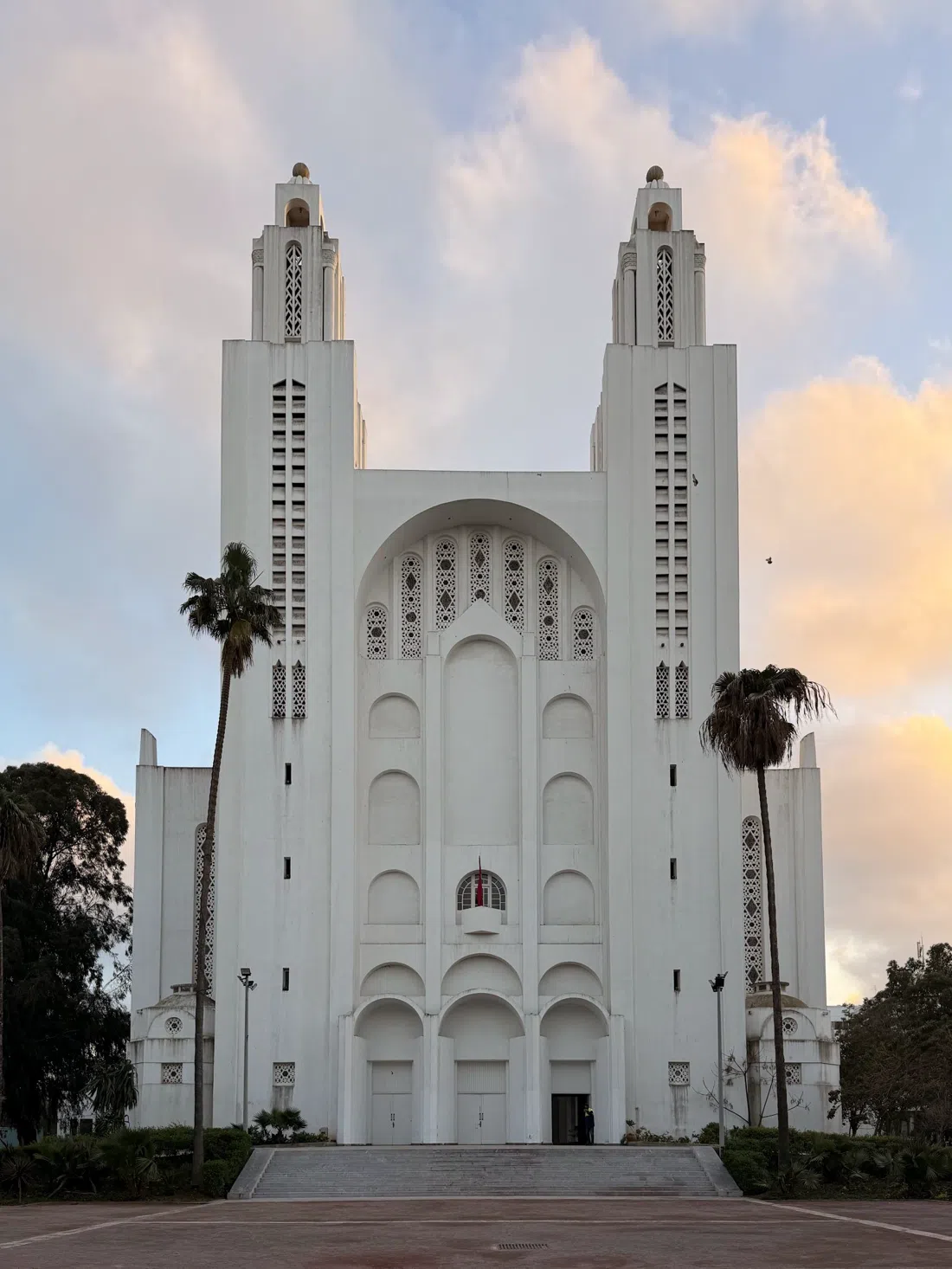
Before Hassan II, the tallest thing on Casablanca's skyline making any kind of civic or religious statement was Casablanca Cathedral, also known as Sacré-Cœur, whose bare concrete spires are the clearest before picture you can stand next to and compare with the mosque's engineering leap. It's free, self-guided, and worth ten unhurried minutes, though group access to the interior can be irregular, so pair it with an outdoor stop rather than planning a tour group's whole morning around getting inside.
At the other end of the story sits Sky 28 / Bar 28, the rooftop restaurant and bar at Kenzi Tower on the Twin Center, which is the glass-tower business district that Hassan II's minaret still visually out-scales despite being decades older and religious rather than commercial. It's open to non-residents, fine for groups in the panoramic restaurant, and better suited to smaller sunset parties at the bar itself. Cocktails run roughly 150-250 MAD, which is Casablanca's real premium-rooftop pricing rather than a tourist markup, so go for the skyline logic of the thing as much as for the drink.
Old Casablanca, a short walk from the coast
A few minutes from the mosque, near the medina wall, sits Rick's Café Casablanca, worth visiting for the medina-wall counterpoint it makes to the mosque, not for any real connection to the film, which was shot entirely on a Hollywood soundstage. It's reservation-essential; email or call ahead and confirm 24 hours prior, and while formal groups up to roughly 50 can be arranged, walk-ins only get bar seating, and only on weekends at that. Expect high prices (mains roughly 200-400+ MAD, cocktails from 100 MAD) and note that it closes annually for maintenance in late August through early September, reopening 7 September 2026, so it's worth checking the dates if you're travelling through around then.
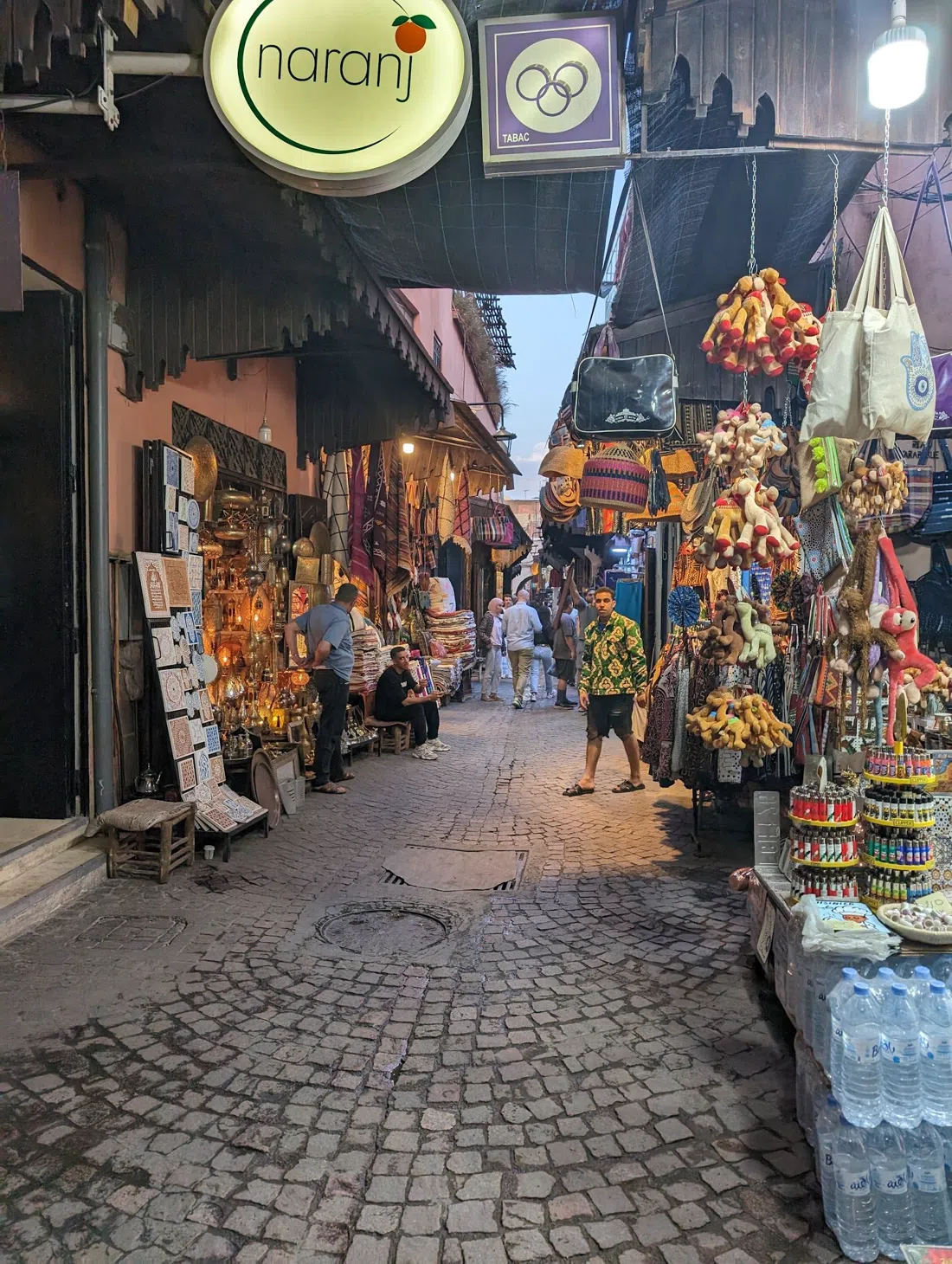
For the identity-building instinct that came before the mosque, walk Quartier Habous, the so-called New Medina, built decades earlier in a deliberately different architectural language entirely: same civic ambition, opposite style. It's free to wander, and small-group guided walks are widely available if you want the context rather than just the photos.
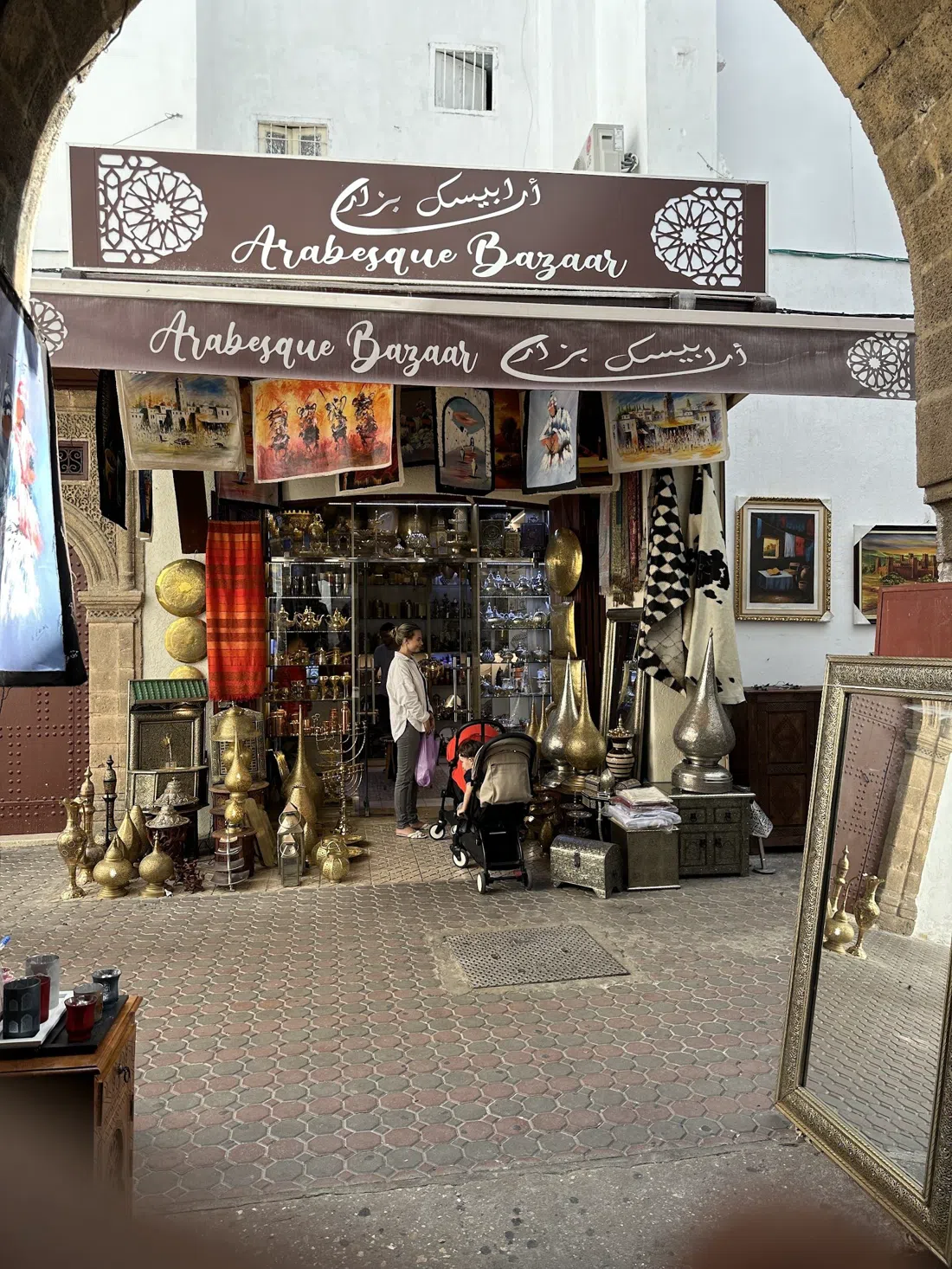
The actual old town is easy to get turned around in alone, which is why a purpose-built Ancienne Médina small-group walking tour (usually capped at five to fifteen travellers, with private options available) is the sensible way to see it. Expect to pay roughly $25-60 per person, and treat it as the natural next stop from the mosque, since it's a short walk away and gives you the oldest built fabric in the city as contrast to the newest.
For something quieter, Villa des Arts de Casablanca is a free gallery with occasional talks and concerts, a low-key counterpoint stop for the contemporary art scene that's grown up in the mosque's cultural shadow rather than in competition with it. Groups are welcome and there's rarely a queue.
The contemporary bookend
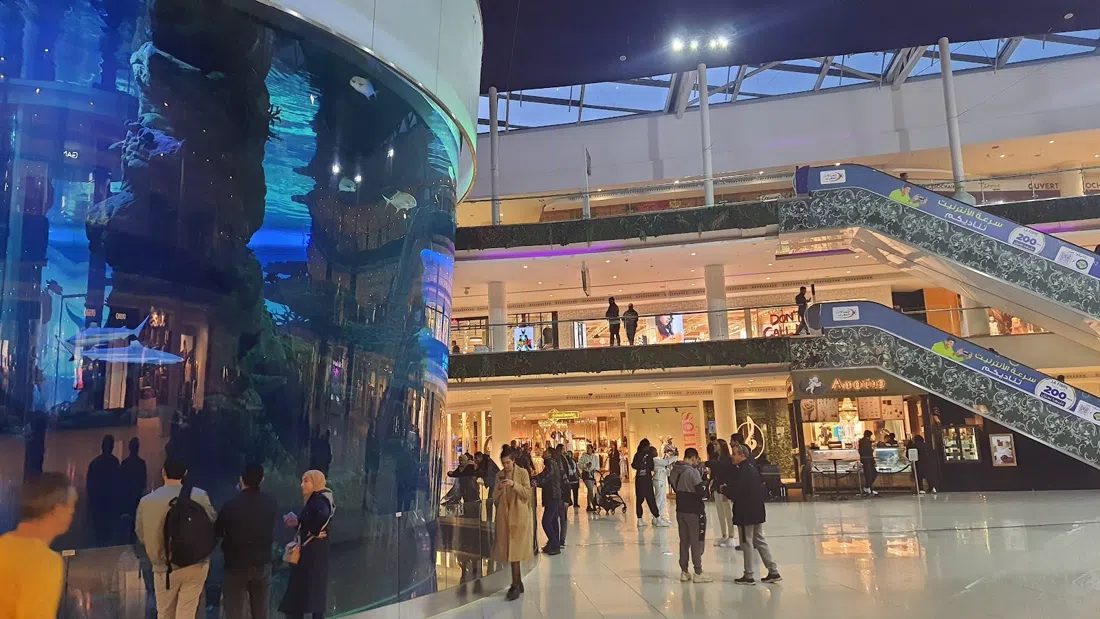
At the far end of the corniche, Morocco Mall & Aquadream Aquarium is Africa's largest mall, built at the Atlantic end of the same stretch of coast as the mosque's ocean-facing plaza: the contemporary, commercial answer to the same build-big-on-the-water instinct. The mall itself is free to enter and handles large groups and families easily; the aquarium inside is ticketed separately at a mid-range price. It isn't essential the way the mosque is, but it closes the loop on what facing the ocean has meant to Casablanca across a century of very different ambitions.
Planning the visit
Casablanca's coastal sights string out along the corniche in a rough line (mosque, lighthouse, cathedral, Habous, Twin Center), so a taxi or the tram gets you between clusters faster than walking the whole stretch, though the mosque-to-lighthouse leg itself is manageable and scenic on foot. Petit taxis are cheap and metered in theory, but agreeing a price before you get in avoids arguments; carry small-denomination dirhams, since street vendors and some smaller restaurants don't handle cards well. The mosque's tour slots run year-round, but check the actual tide and swell before planning a Phare d'El Hank sunset or a surf-school session, since low tide changes what's visible or ridable. Budget a full day for the coast itself (mosque tour, a lighthouse sunset, one proper sit-down meal) and treat the medina and Habous as a separate half-day rather than squeezing everything into one afternoon. If you're basing yourself near this stretch of shoreline, start with a Casablanca hotel search, and the full Casablanca guide covers the rest of the city beyond it.